Drinking Water in the Workplace: Requirements and Controls
Access to drinking water is a fundamental employer obligation. This article presents regulatory requirements, quality controls and best practices to ensure healthy water in the workplace.
Drinking Water in the Workplace: Requirements and Quality Controls
Access to safe drinking water is essential for protecting workers’ health. In Morocco, employers must ensure workplace hygiene and provide an adequate supply of drinking water on construction sites. This article presents the regulatory framework, water quality controls, and good practices for maintaining safe drinking water in the workplace.
Introduction
Access to safe drinking water is a fundamental element of workplace hygiene and health risk prevention. Contaminated water can transmit pathogens or expose people to certain chemical substances.
In Morocco, Article 281 of the Labour Code requires employers to ensure hygienic and sanitary conditions in workplace premises, including access to drinking water. It also requires employers to ensure a normal supply of drinking water on construction sites.
Prevention involves more than simply providing water. It also requires protecting installations against contamination, maintaining equipment, and responding promptly whenever water quality is in doubt.
1. Regulatory Framework in Morocco
Several legal texts govern the quality of water intended for human consumption.
The Labour Code
Law No. 65-99 establishing the Moroccan Labour Code, promulgated by Dahir No. 1-03-194 of 14 September 2003, is a key reference for workplace hygiene. Article 281 explicitly refers to drinking water as part of the sanitary conditions required in workplace premises and requires a normal supply of drinking water on construction sites.
Regulations on Drinking Water
Law No. 36-15 on water governs, among other matters, the protection and management of water resources. The sanitary requirements applicable to water intended for human consumption are also specified in relevant regulatory texts, including Decree No. 2-05-1326 concerning water for food-related uses and Order No. 570-15 establishing drinking water quality standards.
These references should be considered when determining the requirements applicable to a facility, particularly when a company operates its own borehole, storage tank, or water treatment system.
2. Providing Access to Drinking Water
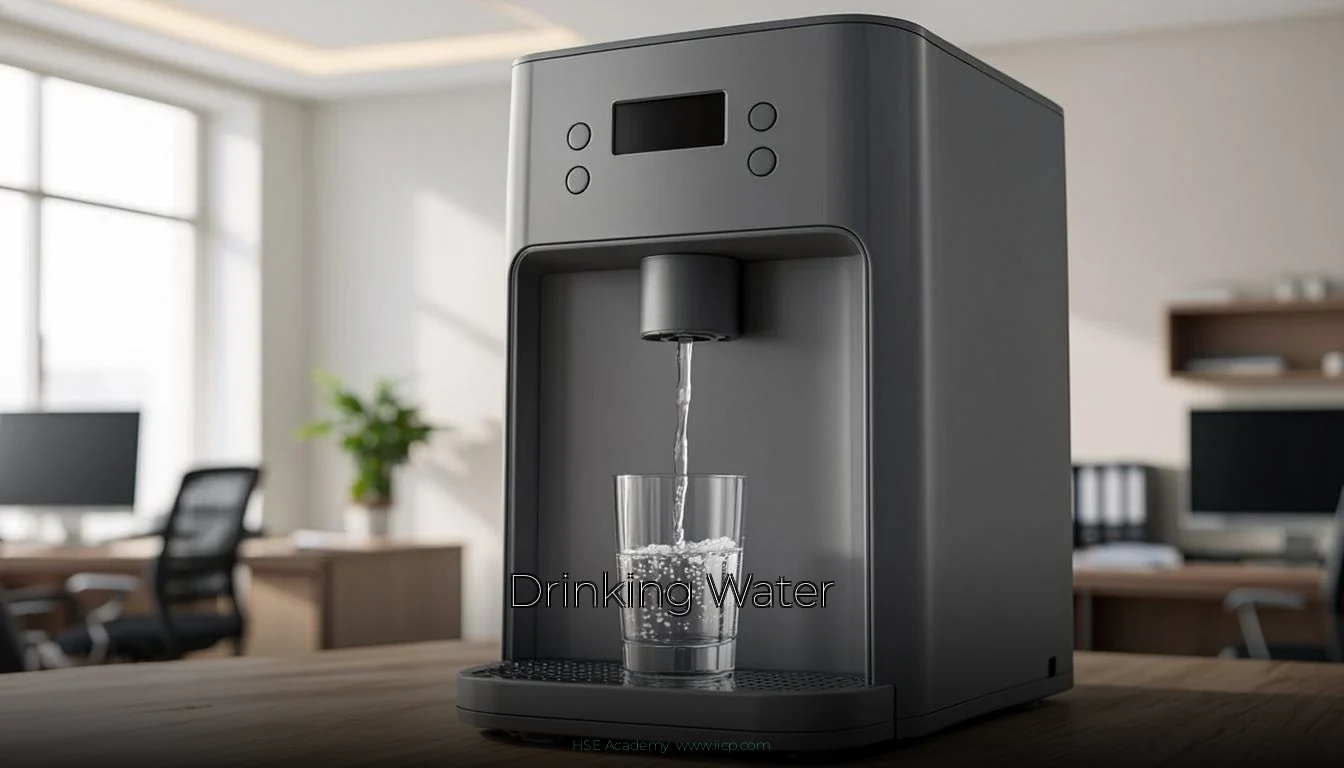
The company should organise convenient access to drinking water in quantities appropriate to workers’ needs and the conditions of their activities.
Recommended preventive measures include:
- Installing accessible drinking water points within a reasonable distance of workstations.
- Adjusting the available supply to workforce size, shift duration, and operational requirements.
- Ensuring adequate access to water during hot weather and physically demanding work.
- Keeping taps, drinking fountains, and dispensers clean and in good working condition.
- Protecting water distribution points against dust, splashes, and other potential sources of contamination.
- Clearly identifying non-potable water points, where present, and preventing their use for drinking.
- Providing clean drinking vessels and avoiding the sharing of individual containers.
Specific ratios for water points, service temperatures, and required equipment must be checked against the regulations applicable to the establishment. They should not be presented as universal legal requirements without a verified regulatory reference.
In workplaces exposed to heat, the employer should also assess dehydration risks and implement appropriate preventive measures. Drinks containing mineral salts are not always necessary; their use depends on factors such as the intensity and duration of physical effort and the risk assessment.
3. Drinking Water Quality Controls
Water monitoring should be adapted to the water source, the configuration of the installation, and the risk of contamination. A quarterly or six-monthly testing schedule does not automatically apply to every workplace.
3.1. Microbiological Testing
Microbiological testing helps identify indicators of contamination and, where relevant, microorganisms that may present a health risk.
Parameters may include:
- Escherichia coli (E. coli);
- Intestinal enterococci;
- Other microbiological indicators required under the applicable standards.
The selection of parameters and the frequency of sampling should be determined according to the regulations, the water supply system, the characteristics of the network, and the risk assessment.
3.2. Physicochemical Testing
Depending on the water source and the risks identified, testing may cover various parameters, including:
- pH and turbidity;
- Nitrates and nitrites;
- Certain metals, particularly lead;
- Parameters related to water treatment, where treatment is used;
- Other substances that may be present depending on the source and surrounding environment.
The list of parameters, limit values, and analytical methods must correspond to the regulatory and technical references applicable in Morocco. An indicative list does not replace a complete compliance assessment.
3.3. Legionella Testing: A Specific Risk Assessment
Legionella testing is not a routine requirement for every drinking water supply. It is relevant to certain installations that present a risk of exposure to contaminated aerosols, such as some hot-water systems, showers, or specialised equipment.
The need for dedicated microbiological monitoring depends on the installation configuration and the risk assessment. Preventive measures may include maintenance, limiting water stagnation, and controlling the operating conditions of the system.
4. Installation Maintenance and Contamination Prevention
Poorly maintained pipework or contaminated distribution equipment can compromise water quality after the water enters the facility.
Good practices include:
- Cleaning and maintaining drinking fountains and dispensers in accordance with the manufacturer’s instructions.
- Following the recommended replacement schedule for filter cartridges and maintaining water treatment devices.
- Avoiding prolonged stagnation and implementing appropriate measures after extended periods of non-use.
- Checking the condition of storage tanks, connections, and accessible pipework.
- Preventing backflow and connections that could contaminate the drinking water network.
- Using qualified personnel for cleaning, disinfection, or repairs requiring specialised expertise.
- Keeping test results, maintenance interventions, and corrective actions in a monitoring file.
Maintaining a monitoring log is good management practice. However, whether such a record is legally mandatory, and what it must contain, should be verified according to the sector and the applicable regulations.
5. What to Do When Water Quality Is Suspect or Non-Compliant
When contamination is suspected or test results reveal non-compliance, the company should act promptly to protect workers.
The recommended procedure includes the following steps:
- Assess the risk and identify the affected distribution points or installations.
- Temporarily stop consumption of the suspect water whenever its safety cannot be assured.
- Provide a safe alternative supply, such as drinking water from a reliable source.
- Arrange the necessary checks and tests through a competent laboratory, in accordance with applicable requirements.
- Identify the cause of the contamination and implement appropriate corrective measures.
- Verify that compliance has been restored before resuming use of the affected installation.
- Inform the relevant persons and competent authorities whenever the situation or regulations require it.
Stopping use and providing replacement water should be proportionate to the identified risk. Where there are reasonable grounds to suspect a health hazard, precautionary measures should not be delayed while waiting for laboratory confirmation.
6. Practical Application in Moroccan Businesses
The measures required depend on the water supply arrangement.
Businesses Supplied by the Public Network
Water supplied by a public distributor is subject to the monitoring arrangements applicable to production and distribution. However, the company must also prevent contamination within its own installations, particularly in storage tanks, internal pipework, and distribution equipment.
If the water changes colour, smell, or taste, if work has been carried out on the network, or if a public health alert has been issued, further checks are necessary before concluding that the water is safe to drink.
Businesses Using a Borehole or Private Water Supply
A private water supply requires increased vigilance. The company must check any required authorisations, compliance with applicable water quality requirements, and the monitoring obligations imposed by the regulations.
Testing should follow a programme appropriate to the risks and applicable requirements. Clear water with no unusual smell is not necessarily safe to drink.
Businesses Using Storage Tanks, Filters, or Dispensers
These systems must be maintained in accordance with applicable requirements and relevant technical instructions. The company should verify that their use does not compromise the quality of the water distributed.
Where workers are exposed to heat or strenuous physical activity, the actual availability of drinking water should be incorporated into work organisation and preventive measures.
Conclusion
Managing drinking water in the workplace relies on three principles: ensuring an adequate supply, preserving water quality up to the point of consumption, and responding promptly to health risks.
In Morocco, Article 281 of the Labour Code provides an important foundation for workplace hygiene obligations, while the regulations governing drinking water establish the applicable quality and monitoring framework. Effective prevention requires each company to identify its water supply arrangements, assess its risks, and implement controls appropriate to its situation.
Sources and References
-
Moroccan Labour Code — Law No. 65-99, particularly Article 281.
https://www.wipo.int/wipolex/fr/legislation/details/7371 -
Moroccan Ministry of Health and Social Protection — Guide to the Sanitary Inspection of Drinking Water Supply Systems.
https://www.sante.gov.ma/Documents/2023/2_Conf%C3%A9rence/Guide%20Inspection%20sanitaire%20eau%20potable.pdf -
World Health Organization (WHO) — Guidelines for Drinking-water Quality.
https://www.who.int/publications/i/item/9789240121225