Working at Height in Morocco: Regulation and Fall Prevention
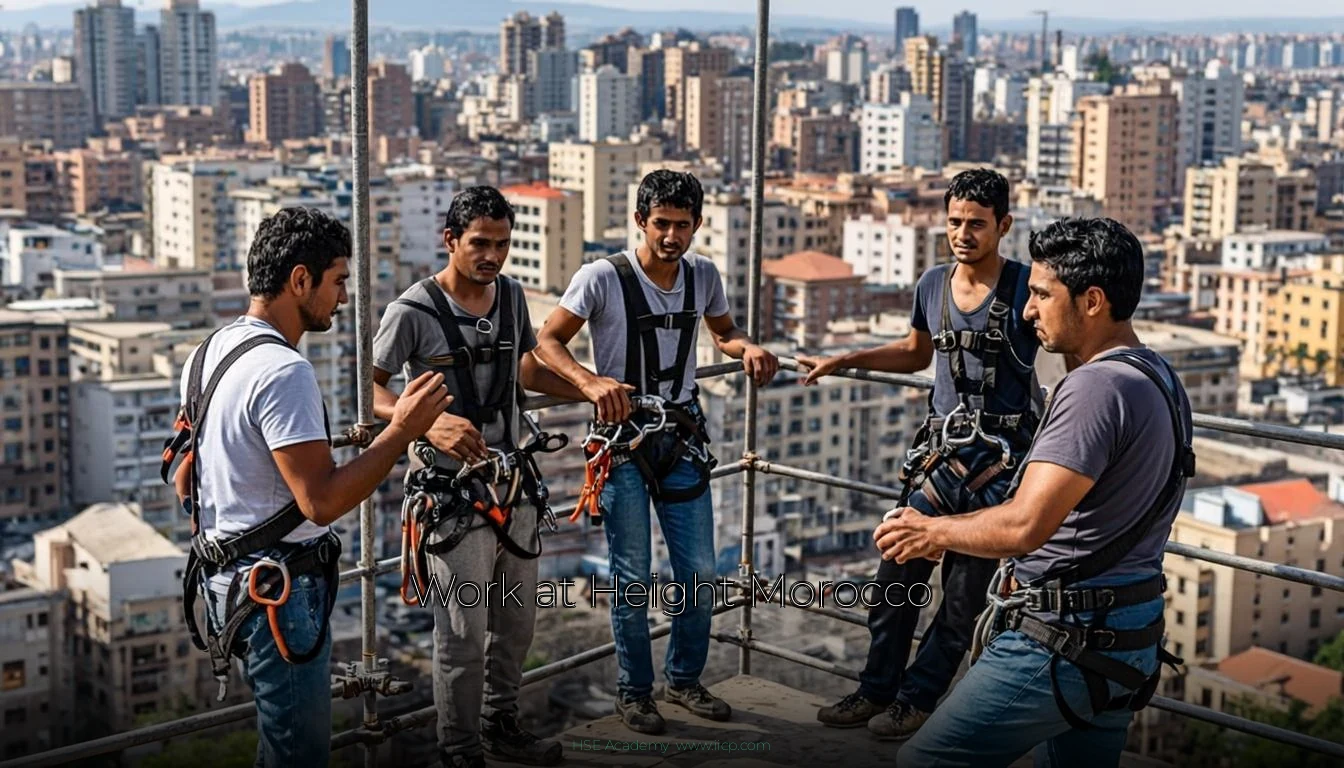
Working at height (scaffolds, roofs, platforms) is one of the leading causes of fatal accidents in Morocco. This article presents legal obligations, PPE and collective prevention measures.
Expert QHSE (Quality, Health, Safety, Environment) articles by IICP HSE Academy. Sources: OSHA, INRS, ISO, IMANOR.

Working at height (scaffolds, roofs, platforms) is one of the leading causes of fatal accidents in Morocco. This article presents legal obligations, PPE and collective prevention measures.

Internal HSE communication is essential to keep the management system alive. Posters, intranet, meetings, safety events: this article presents channels, messages and best practices.

Road accidents during business travel represent the leading cause of fatal occupational accidents. This article presents employer obligations and the travel plan.

Listeria monocytogenes and Salmonella bacteria cause serious foodborne infections. In collective catering and food industry, prevention relies on temperature control and strict hygiene.

Occupational dermatoses (contact eczema, irritant dermatitis) are among the most frequent occupational diseases. This article presents causes, PPE and prevention.

Corporate Social Responsibility (CSR) in Morocco is developing with the National CSR Charter. For HSE companies, it is an opportunity to integrate environment, social and governance.

Entering working life exposes young people to increased psychosocial risks: stress, overload, lack of support, harassment. Prevention must target onboarding, supervision and training.

The SEVESO directive governs storage of hazardous substances in large quantities. SEVESO facilities must implement a Safety Management System (SMS) and an Internal Emergency Plan (IEP).

Workplace discrimination (sex, disability, age, origin) is prohibited by the Moroccan Labor Code. Employers must ensure equal treatment and prevent discrimination in hiring and during employment.