
Occupational Dermatoses: Preventing Skin Diseases at Work
Occupational dermatoses (contact eczema, irritant dermatitis) are among the most frequent occupational diseases. This article presents causes, PPE and prevention.
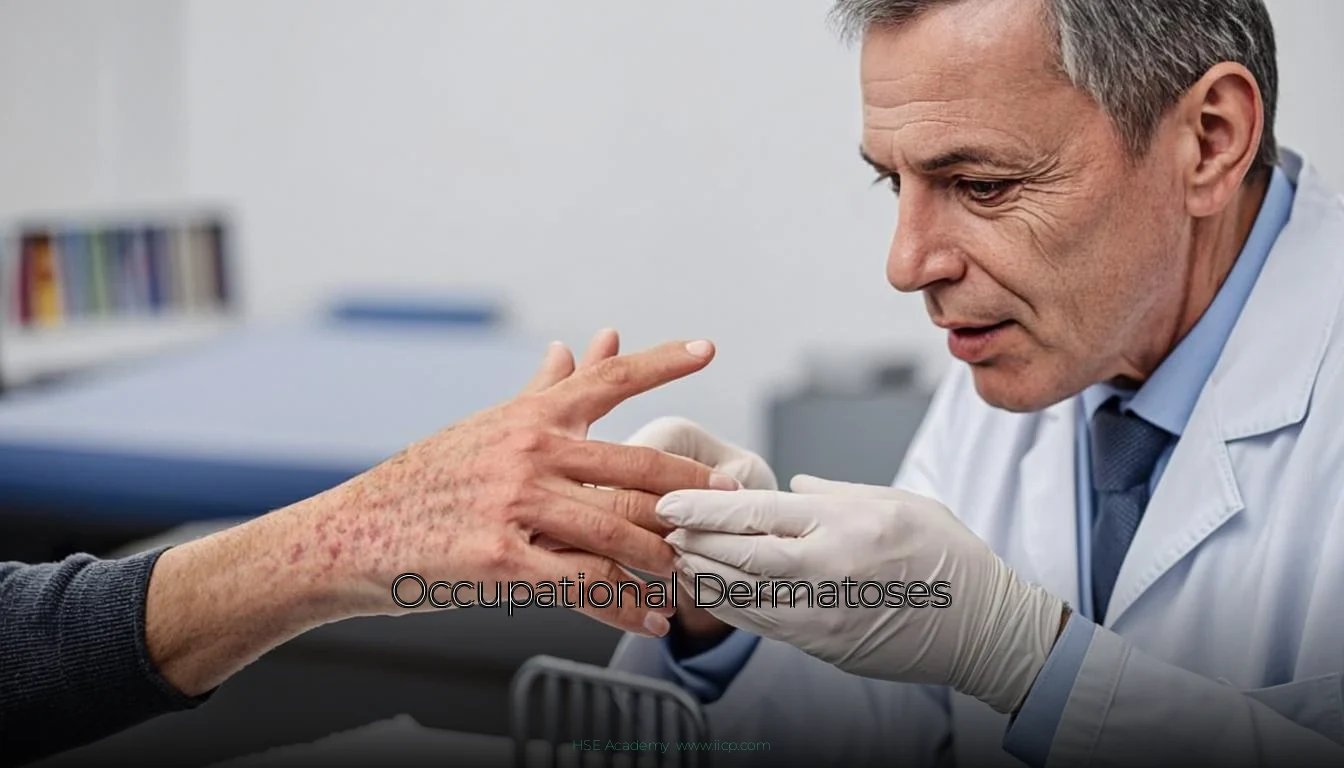
Occupational Dermatoses: Prevention of Skin Diseases at Work
Occupational dermatoses, particularly irritant and allergic contact dermatitis, rank among the work-related skin conditions. They can be caused or aggravated by exposure to chemical substances, irritants, allergens, or specific working conditions. This article presents their main causes, the selection of Personal Protective Equipment (PPE), and preventive measures to reduce the risk of skin damage.
Occupational dermatoses encompass skin conditions caused or aggravated by working conditions. Contact dermatitis, both irritant and allergic, are among the most frequently encountered forms in occupational health, particularly in sectors where the skin is exposed to irritants, allergens, or repeated contact with water and detergents.
Definition and Impact
An occupational dermatosis is a skin condition (erythema, vesicles, scales, fissures, itching, or edema) caused or aggravated by occupational exposure to a chemical, physical, or biological agent, or by certain working conditions. The skin acts as a protective barrier between the body and its environment. Repeated exposure to irritants can compromise this barrier and promote the appearance of lesions or sensitization to certain allergens.
Types of Dermatoses
Irritant Contact Dermatitis
It results from contact with substances or working conditions that directly damage the skin: detergents, solvents, acids, bases, frequent washing, or prolonged work in a humid environment. The risk depends mainly on the nature of the agent, its concentration, and the frequency and duration of exposure. Lesions often affect the hands and forearms. Intense exposure to a corrosive product can cause an acute chemical burn, which must be distinguished from irritant contact dermatitis.
Allergic Contact Dermatitis
It is a delayed immune reaction, usually of type IV, occurring after sensitization to an allergen. Common occupational allergens include nickel, chromium compounds found particularly in some cements, rubber additives, epoxy resins, certain fragrances, and preservatives. The condition can manifest as a pruritic eruption, sometimes vesicular, and may extend beyond the initial area of contact.
Contact Urticaria
It usually appears rapidly after contact with an agent. It can be immunological in origin, particularly via a mechanism involving IgE, or non-immunological. The agents involved can include certain proteins, natural latex, or animal-derived products. It is characterized by localized redness and swelling, sometimes accompanied by itching. A generalized reaction or breathing difficulties require urgent medical attention.
Exposed Populations
Sectors that frequently expose workers to skin risks include:
- Hairdressing: Hair dyes containing PPD, persulfates;
- Cleaning: Detergents, disinfectants;
- Construction: Cement, chromium compounds, resins, hydrocarbons;
- Mechanics: Cutting oils, machining fluids, solvents;
- Healthcare: Gloves, disinfectants, antiseptics, and some medications;
- Agri-food: Animal proteins, fruit juices, and other plant-based substances;
- Metallurgy: Machining fluids, nickel, and other metals depending on the processes.
The actual risk depends on the substances used, the processes, working conditions, and the preventive measures implemented.
Main Causes
Irritants
- Soaps and detergents, especially with frequent or prolonged use;
- Organic solvents, depending on the products and exposure conditions;
- Acids and bases, particularly hydrochloric acid and sodium hydroxide;
- Cutting fluids, aqueous emulsions, and neat oils;
- Repeated work in a humid environment and frequent hand washing.
Allergens
- Nickel (certain tools, metal parts, and objects in contact with the skin);
- Chromium and its compounds, particularly in some cements;
- Natural latex and rubber additives present in some gloves and equipment;
- Epoxy resins (adhesives, coatings, and paints);
- PPD (para-phenylenediamine), found in some hair dyes.
The presence of a substance alone is not sufficient to establish the cause of a dermatosis; the diagnosis is based on clinical evaluation, exposure history, and, if necessary, specialized allergy testing.
Prevention
Skin PPE
- Suitable gloves for the product and task: gloves intended to protect against chemical risks must be selected according to the applicable standard, the manufacturer's permeation and degradation data, and the actual conditions of use. The EN ISO 374 standard (protective gloves against chemicals and microorganisms) pertains to protection against chemicals according to applicable requirements;
- Mechanical protection gloves compliant with EN 388 when a mechanical risk is also present. This standard does not, by itself, guarantee chemical protection;
- Chemical protective clothing selected according to the risk and required level of protection. Types 4, 5, and 6 correspond to distinct requirements and are not automatically suitable for all exposures;
- Protective creams, when suitable for the task, as a supplement to other preventive measures. They do not replace necessary gloves and do not prevent all allergies;
- Emollient or moisturizing creams after work and, if necessary, during the day, according to recommendations tailored to the workstation and skin condition.
Gloves must be chosen based on the substances handled, the duration and frequency of contact, the risk of splashing or immersion, chemical compatibility, and the constraints of the job. They must be checked and replaced according to the manufacturer's instructions and the conditions of use. An unsuitable glove or one worn for too long can promote irritation or cause an allergy.
Organizational Measures
- Substitution of irritant or sensitizing products with less hazardous alternatives when technically possible;
- Task organization to reduce the frequency and duration of exposure, particularly to work in a humid environment;
- Automation and the use of closed processes when possible;
- Ventilation and local exhaust ventilation when hazardous agents may be present in the air or deposit on the skin;
- Information and training of workers on skin risks, handling procedures, selection of PPE, and cleaning procedures;
- Appropriate skin hygiene: avoid aggressive cleansers and solvents used to clean the skin; rinse and dry hands thoroughly after washing;
- Access to Safety Data Sheets (SDS) and prevention instructions for the products used.
Medical Surveillance
- Health surveillance of the skin adapted to the risks of the job and applicable regulatory requirements; a systematic examination upon hiring and annually is not a universal rule;
- Allergy assessment, including patch tests, when a healthcare professional deems them indicated in cases of suspected contact allergy;
- Traceability of products handled, exposures, and symptoms, with access to Safety Data Sheets (SDS);
- Reporting and medical assessment of any skin condition possibly related to work. Recognition or declaration as an occupational disease depends on medical criteria and the applicable legislation in the country concerned.
Sources et références
-
Code du travail marocain (Loi n° 65-99), Titre IV — articles 281 et suivants (principes généraux de prévention) ILO NATLEX : https://natlex.ilo.org/dyn/natlex2/r/natlex/fe/details?p3_isn=67319
-
INRS — Dermatite de contact d'origine professionnelle : conduite à tenir (fiche TA 93) : https://www.inrs.fr/media.html?refINRS=TA+93
-
INRS — Agents sensibilisants : démarche de prévention : https://www.inrs.fr/risques/agents-sensibilisants/demarche-prevention