HACCP: Hazard Analysis and Critical Control Points in Food Safety
HACCP is a systematic method for preventing biological, chemical, and physical hazards in food safety. Adopted by the Codex Alimentarius (FAO/WHO), it relies on 7 fundamental principles.
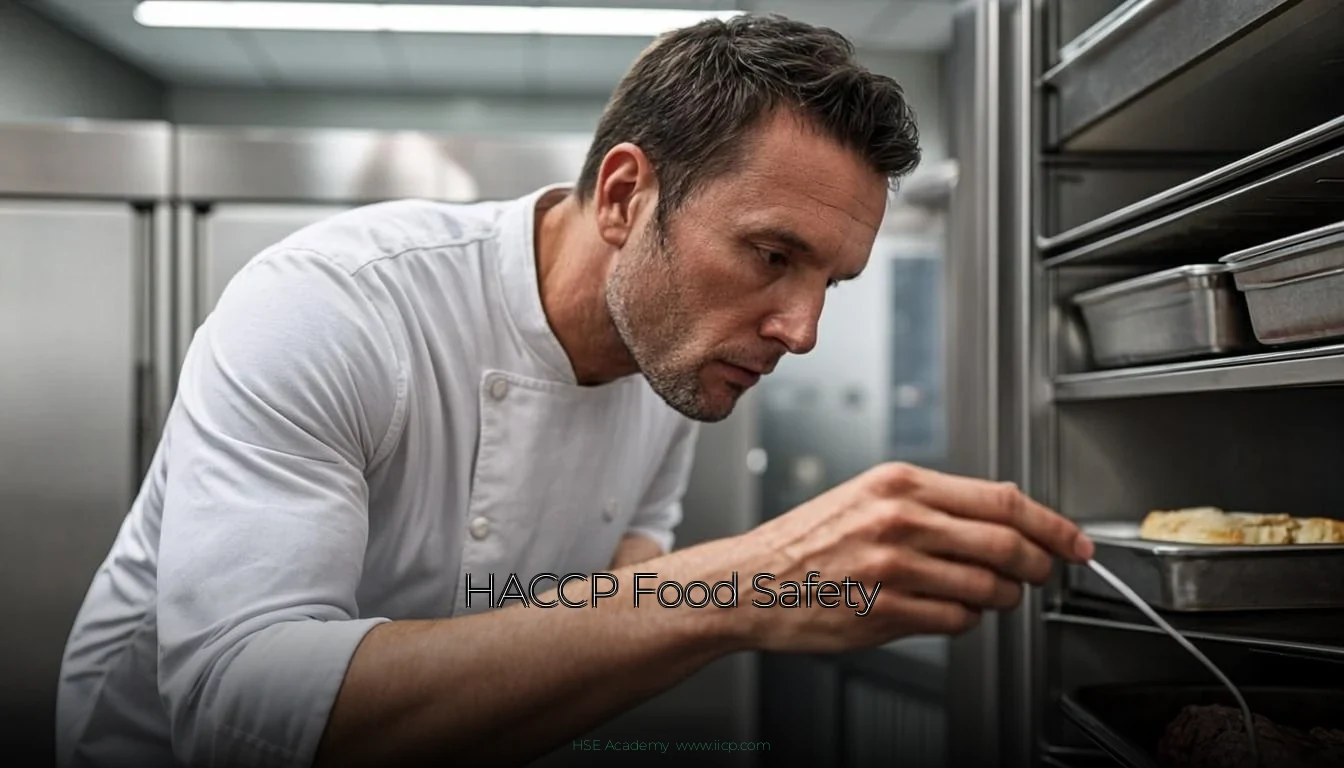
HACCP: Hazard Analysis and Critical Control Points in Food Safety
HACCP is a systematic method for preventing and controlling biological, chemical and physical hazards that may compromise food safety. Recognised by the Codex Alimentarius, it is based on seven fundamental principles and a structured approach consisting of twelve implementation steps.
Introduction
HACCP stands for Hazard Analysis and Critical Control Points. It is a preventive method for controlling hazards that may affect food safety.
Rather than relying solely on testing the finished product, HACCP aims to identify, assess and control hazards at every relevant stage of the food chain, from raw material reception to distribution and, depending on the context, consumption.
Originally developed in the 1960s to address food safety requirements for American space programmes, with the involvement of Pillsbury, NASA and the US Army laboratories, the method was subsequently incorporated into the international recommendations of the Codex Alimentarius, developed within the framework of the Food and Agriculture Organization (FAO) and the World Health Organization (WHO).
The main reference document is the General Principles of Food Hygiene (CXC 1-1969). Its 2022 revision presents the HACCP principles and guidance for their implementation.
The Three Main Categories of Food Safety Hazards
HACCP analysis considers hazards that may make food unsafe for consumers.
1. Biological Hazards
These include, in particular:
- Pathogenic bacteria such as Salmonella, Listeria monocytogenes and certain strains of Escherichia coli.
- Viruses, including norovirus and hepatitis A virus.
- Parasites such as Toxoplasma gondii and Trichinella.
- Certain moulds and the toxins they may produce.
Control measures may include heat treatment, prevention of cross-contamination, compliance with storage conditions and implementation of good hygiene practices.
2. Chemical Hazards
These may arise from:
- Pesticide or veterinary drug residues.
- Environmental contaminants such as lead, cadmium, mercury, dioxins and PCBs.
- Residues from cleaning and disinfection products.
- Uncontrolled food allergens or allergens not declared in accordance with applicable requirements.
- Non-compliant use of food additives.
Preventive measures include supplier approval, chemical management, contamination prevention and compliance with applicable regulatory requirements.
3. Physical Hazards
These are foreign objects that may cause injury or make food unsuitable for consumption, including:
- Fragments of glass or metal.
- Pieces of hard plastic.
- Stones or unwanted bone fragments.
- Jewellery or other objects accidentally introduced into food.
Hair and insects may also constitute physical contamination, depending on the context and the characteristics of the product.
Preventive measures may include raw material inspections, equipment maintenance, product protection and, where justified by the risk analysis, the use of detection devices.
The Seven Fundamental HACCP Principles
The Codex Alimentarius defines seven principles that form the basis of the HACCP system.
Principle 1 — Conduct a Hazard Analysis
This involves identifying biological, chemical and physical hazards that may arise at each stage of the process and assessing their significance.
The analysis considers the severity of potential health effects and the likelihood of the hazard occurring, taking existing control measures into account.
The objective is to identify significant hazards requiring specific control measures.
Principle 2 — Determine Critical Control Points (CCPs)
A Critical Control Point (CCP) is a step at which a control measure is essential to prevent or eliminate a significant hazard or reduce it to an acceptable level.
Possible examples, depending on the product and process, include:
- A heat treatment designed to destroy a pathogenic microorganism.
- A cooling step where control is essential to prevent an identified hazard.
- Another operation where control is indispensable to ensure product safety.
Important: cooking, cooling, refrigerated storage and disinfection are not automatically CCPs. Their classification must result from the hazard analysis and the CCP determination process. Some control measures may instead fall under prerequisite programmes or good hygiene practices.
Principle 3 — Establish Critical Limits
For each CCP, critical limits must be established to distinguish between a controlled situation and an unacceptable one.
These limits may relate to:
- Temperature.
- Treatment duration.
- pH.
- Water activity (aw).
- Other parameters relevant to the identified hazard.
Critical limits must be justified and validated using scientific evidence, reliable technical references or applicable regulatory requirements.
For example, a combination of core temperature and holding time may be established for a heat treatment. However, 75°C for 30 seconds, sometimes used as a practical reference, must not be considered a universal rule. The selected combination must be appropriate for the product, the target hazard and the process.
Principle 4 — Establish a Monitoring System
Monitoring verifies that each CCP remains within its established critical limits.
The monitoring system should specify:
- The parameter to be measured or observed.
- The monitoring method and frequency.
- The person responsible.
- The equipment used and, where necessary, its calibration.
- How the results will be recorded.
Monitoring may be continuous or conducted at defined intervals, depending on the CCP and the process. Records must be sufficiently reliable to allow prompt action when control is lost.
Principle 5 — Establish Corrective Actions
Corrective actions must be defined in advance for situations in which monitoring reveals that a critical limit has been exceeded or control has been lost.
They should enable the organisation to:
- Restore control of the process.
- Identify and isolate potentially affected products.
- Assess product safety and determine the appropriate disposition.
- Investigate the cause of the deviation and prevent recurrence.
- Record the decisions made and the actions taken.
Potentially unsafe food must not be released for consumption until its safety has been established.
Principle 6 — Verify the HACCP System
Verification confirms that the system operates as intended and that control measures are effectively implemented.
It may include:
- Reviewing monitoring records.
- Conducting internal audits.
- Checking measuring equipment.
- Reviewing deviations and corrective actions.
- Carrying out microbiological analyses or other relevant tests, depending on the risks.
Verification must be distinguished from routine monitoring. It assesses the overall effectiveness of the system and whether it is being properly implemented.
Validation is also important. It involves obtaining evidence that the selected control measures are capable of controlling the hazards concerned. It is particularly relevant when the plan is developed and whenever significant changes make reassessment necessary.
Principle 7 — Establish Documentation and Record-Keeping
The HACCP system must be documented in a manner appropriate to the nature and size of the operation.
Documents and records may include:
- The hazard analysis.
- The justification for identifying CCPs.
- Critical limits and their validation.
- Monitoring procedures.
- Temperature readings and other measurements.
- Deviations and corrective actions.
- Verification and validation results.
- Successive versions of the HACCP plan.
Clear documentation supports traceability, internal control, inspections and continuous improvement.
Implementing HACCP in Morocco
In Morocco, food safety is governed by a legal framework that includes the following provisions.
1. Law No. 28-07 on Food Safety
Promulgated by Dahir No. 1-10-08 of 11 February 2010, this law establishes the general framework for food safety.
2. Decree No. 2-10-473 of 6 September 2011
This decree establishes the procedures for implementing certain provisions of Law No. 28-07. It addresses matters including hygiene and sanitary conditions, health authorisations and approvals, and self-monitoring programmes and good sanitary practice guides.
3. The Role of ONSSA
The National Office for Food Safety (ONSSA), established under Law No. 25-08 of 18 February 2009, is involved in food safety controls and the implementation of regulatory provisions within its remit.
Depending on the activity and type of establishment, a sanitary approval or authorisation may be required. Food business operators should verify the requirements applicable to their activities with the competent authorities.
4. HACCP and Regulatory Obligations
The Codex Alimentarius is an international reference, but it does not replace national legislation.
In Morocco, specific obligations depend on the legislation applicable to the activity, the type of establishment and the sanitary requirements imposed on it. Operators should therefore verify whether a HACCP-based system, a self-monitoring programme or specific control measures are required for their establishment.
For businesses placing food products on the European Union market, Regulation (EC) No. 852/2004 provides, within its scope, for food business operators to establish, implement and maintain permanent procedures based on HACCP principles. The exact obligations must be assessed according to the activity and the rules applicable to the destination market.
The Twelve Steps for Implementing HACCP
The Codex Alimentarius describes a logical sequence of twelve steps for developing and implementing a HACCP system.
- Assemble the HACCP team: Bring together people with the necessary knowledge of the product and process.
- Describe the product: Specify its composition, characteristics, packaging, storage conditions and shelf life.
- Identify the intended use: Determine how the product will be used or consumed and identify the relevant consumer groups.
- Construct the process flow diagram: Represent the process stages, from reception to dispatch.
- Confirm the flow diagram on-site: Verify that the diagram accurately reflects the actual operations.
- Conduct a hazard analysis: Identify potential hazards, assess their significance and determine the necessary control measures.
- Determine the CCPs: Identify the steps at which control is essential for significant hazards.
- Establish critical limits: Define and justify the criteria distinguishing acceptable from unacceptable conditions at each CCP.
- Establish monitoring procedures: Define the methods, frequencies, responsibilities and records.
- Establish corrective actions: Specify the measures to take when control is lost.
- Validate the plan and establish verification procedures: Demonstrate the effectiveness of the control measures and check that the system functions properly.
- Establish documentation and record-keeping: Maintain the evidence necessary to demonstrate implementation and evaluate the system.
This sequence should be adapted to the size of the business, the complexity of the process and the hazards actually identified.
HACCP and ISO 22000: What Is the Difference?
HACCP is a method for controlling hazards that may affect food safety. It is one of the technical foundations of the food safety management system defined by ISO 22000:2018.
ISO 22000 incorporates HACCP principles into a broader management framework that includes communication, prerequisite programme management, performance evaluation and continual improvement.
Implementing HACCP principles does not, by itself, mean that a company is ISO 22000 certified. Certification is a separate process that involves an assessment against the requirements of the standard.
Conclusion
HACCP is an essential preventive method for identifying, assessing and controlling hazards that may compromise food safety. Its implementation is based on seven fundamental principles and a logical sequence of twelve steps.
For professionals working in health, safety and environment management in the food industry, mastering this approach is essential for structuring preventive measures, strengthening traceability and improving food safety.
Combined with appropriate good hygiene practices and, where relevant, a management system such as ISO 22000, HACCP helps establish a coherent approach to controlling food safety risks.
Official Sources and References
-
Codex Alimentarius — General Principles of Food Hygiene, CXC 1-1969, 2022 revision. FAO/WHO.
https://www.fao.org/fao-who-codexalimentarius/codex-texts/codes-of-practice/en/ -
ONSSA — Moroccan food safety regulations.
https://www.onssa.gov.ma/reglementation/reglementation-transversale/securite-sanitaire/ -
European Union — Regulation (EC) No. 852/2004 on the hygiene of foodstuffs.
https://eur-lex.europa.eu/legal-content/EN/TXT/?uri=CELEX:32004R0852