ISO 45001:2018 — The Occupational Health & Safety Management System
ISO 45001:2018 specifies requirements for an occupational health and safety management system. Published in 2018, it replaces OHSAS 18001 and helps prevent work accidents and occupational diseases.
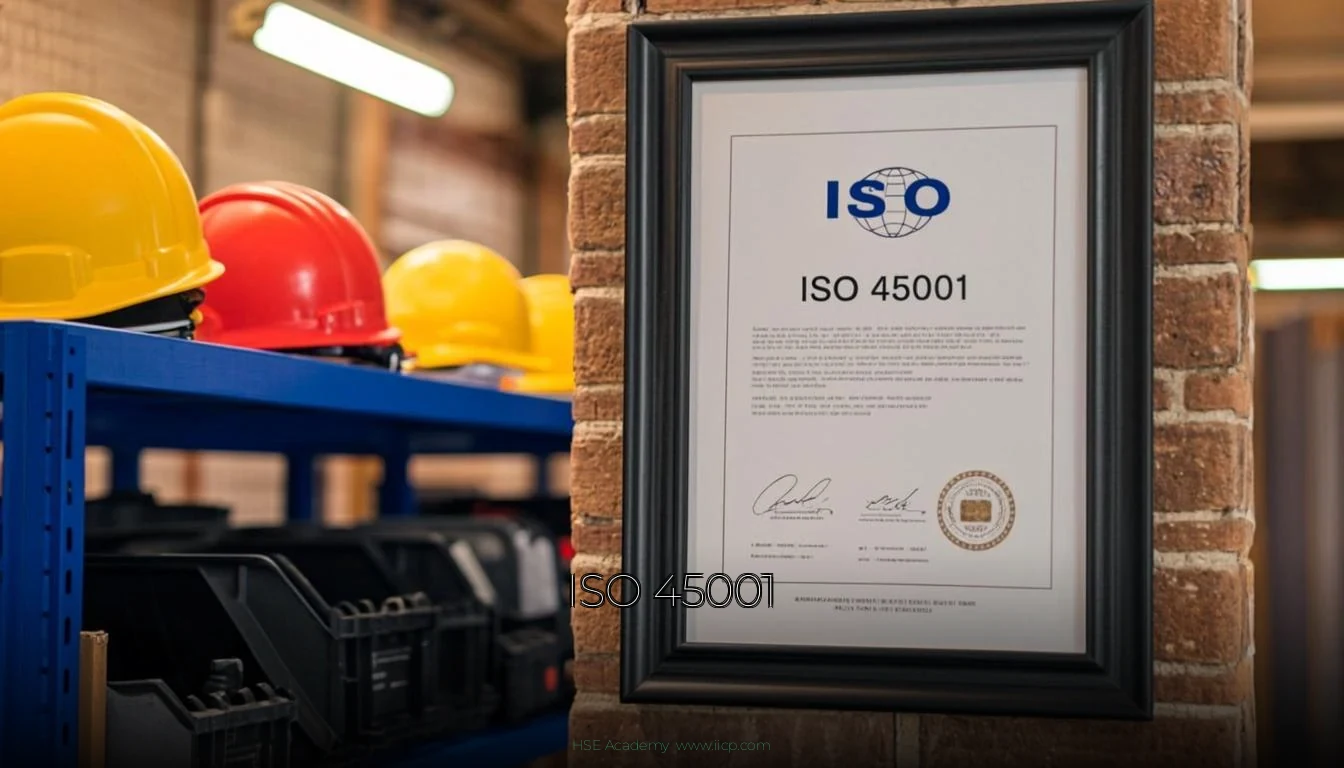
ISO 45001:2018 — Occupational Health and Safety Management Systems
ISO 45001:2018 is the international standard that specifies the requirements for an occupational health and safety (OHS) management system. Published in March 2018, it replaces OHSAS 18001 and helps organizations prevent work-related accidents and illnesses.
Introduction
ISO 45001:2018 is the international standard that specifies the requirements for an occupational health and safety (OHS) management system. It was published in March 2018 by the International Organization for Standardization (ISO) and replaces OHSAS 18001 following a three-year migration period (2018-2021).
Its primary objective is to enable organizations to provide safe and healthy workplaces by preventing work-related injuries and illnesses and by continually improving their OHS performance.
Structure of the Standard
ISO 45001:2018 follows the High Level Structure (HLS, or Annex SL) common to other ISO management standards, facilitating its integration with:
- ISO 9001:2015 (quality management)
- ISO 14001:2015 (environmental management)
- ISO 50001:2018 (energy management)
This common structure comprises 10 chapters:
- Scope
- Normative references
- Terms and definitions
- Context of the organization
- Leadership
- Planning
- Support
- Operation
- Performance evaluation
- Improvement
Key Requirements
1. Leadership and commitment
Top management must demonstrate its commitment to the OHS management system by: establishing and communicating an OHS policy, ensuring the integration of the OHS management system into business processes, allocating necessary resources, and promoting the OHS culture within the organization.
2. Worker participation
ISO 45001:2018 emphasizes the consultation and participation of workers and their representatives at all stages of the OHS management system.
3. Hazard identification and risk assessment
The organization must identify hazards, assess OHS risks, and implement a hierarchy of controls (elimination → substitution → collective → individual).
4. PDCA Cycle
Like all ISO management systems, ISO 45001 follows the Plan-Do-Check-Act cycle: planning objectives and processes, implementation, monitoring and measurement, and acting to improve.
Benefits of Certification
For an organization, ISO 45001:2018 certification provides:
- Reduction of work-related accidents and illnesses: systematic prevention
- Enhanced regulatory compliance
- Cost reduction (insurance, work stoppages, litigation)
- Improved image with stakeholders
- Competitive advantage in international markets
- Better OHS risk management
- Integration with ISO 9001 + ISO 14001 (integrated QHSE management system)
Application in Morocco
In Morocco, ISO 45001:2018 is a voluntary standard but is increasingly adopted, particularly in:
- Industrial sectors (chemicals, cement, mining, agri-food)
- The automotive industry (Renault Tanger, Stellantis Kénitra)
- The mining sector (OCP, Managem requirements)
- Wind and solar farms (international funder requirements)
IMANOR (Moroccan Institute for Standardization) disseminates the standard in Morocco. The Moroccan Labor Code (Law 65-99), Title IV (Articles 281 and onwards), states the general principles of prevention in line with ISO 45001.
Conclusion
ISO 45001:2018 is the international reference for occupational health and safety management. Combined with ISO 9001:2015 (quality) and ISO 14001:2015 (environment), it enables the construction of a coherent and effective integrated QHSE management system. For Moroccan organizations, it is both a tool for regulatory compliance and a strategic lever for improving prevention.
Sources et références officielles
-
Code du travail marocain (Loi n° 65-99), Titre IV — articles 281 et suivants (principes généraux de prévention en cohérence avec ISO 45001) ILO NATLEX : https://natlex.ilo.org/dyn/natlex2/r/natlex/fe/details?p3_isn=67319
-
OIT — Conventions 155 (1981) et 187 (2006) (cadre international SST, fondamentales depuis 2022 — voir article #1 OMS catégorie sante-travail) https://www.ilo.org/topics-and-sectors/safety-and-health-work/global-ratification-campaign-c155-and-c187
-
ISO 45001:2018 — Occupational health and safety management systems — Requirements with guidance for use https://www.iso.org/standard/63787.html