Water Pollution: Industrial Prevention and QHSE Management
Water pollution by industrial activities is a major environmental issue. Liquid discharges, wastewater, hazardous substances: this article presents regulations and prevention measures.
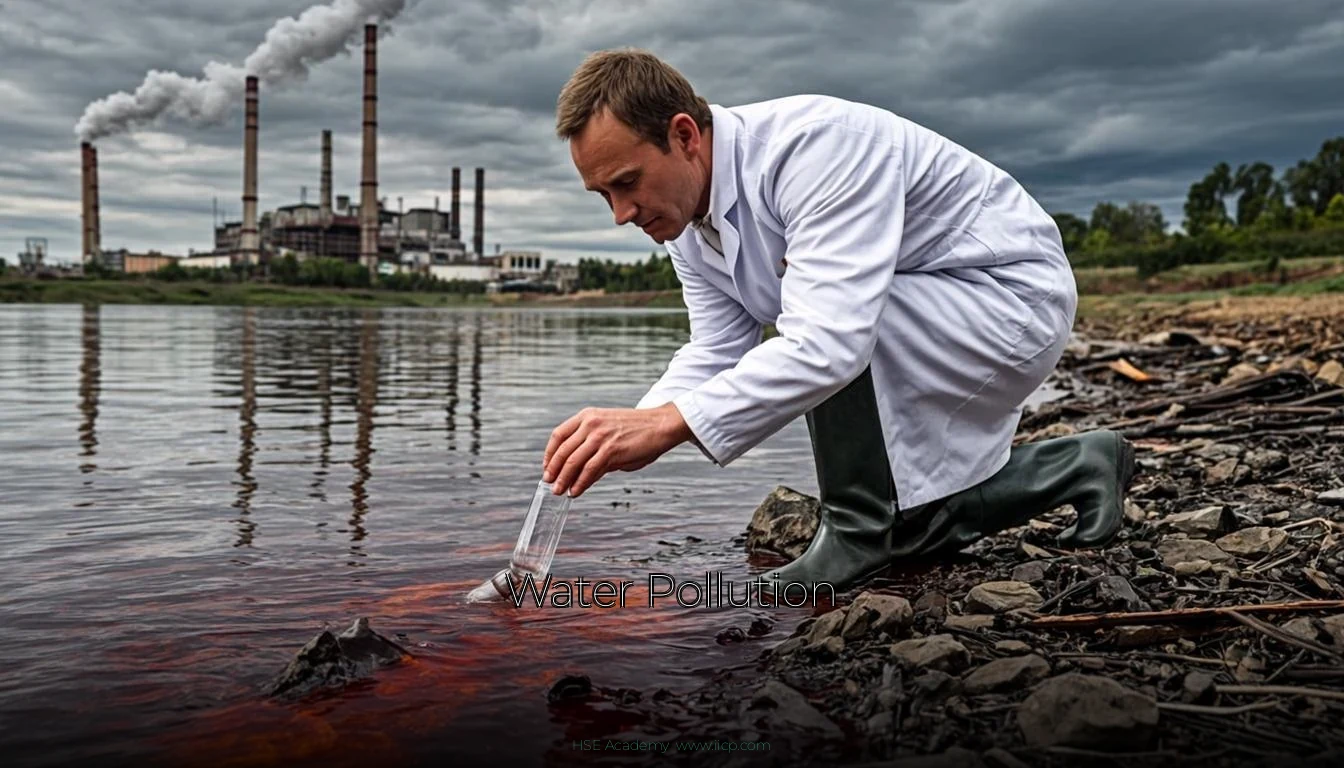
Water Pollution: Industrial Prevention and QHSE Management
Water pollution from industrial activities is a major environmental issue. Liquid effluents, wastewater, hazardous substances: this article presents the regulations and preventive measures.
Water pollution from industrial activities is a major environmental issue. Liquid effluents, wastewater, leaks, and runoff laden with pollutants can contaminate surface and groundwater, threatening ecosystems and public health. QHSE environmental management addresses this issue.
Types of Pollutants
Industrial water pollutants fall into several categories:
- Heavy metals: lead, mercury, cadmium, chromium — toxic and bioaccumulative.
- Organic matter: BOD5 (Biochemical Oxygen Demand) — causes eutrophication.
- Hydrocarbons: PAHs, BTEX, oils — visible and persistent.
- Nitrates and phosphates: agricultural fertilizers and detergents.
- Hazardous substances: chlorinated solvents, pesticides, pharmaceutical residues.
Regulation in Morocco
Law No. 10-95 on Water, promulgated by Dahir No. 1-95-154 of August 16, 1995, constitutes the Moroccan legislative framework. It defines the public domain of water, the conditions of use, and discharge standards. Industrial discharges must comply with Moroccan water quality standards (NM), which set thresholds for each pollutant. Any discharge, release, or direct or indirect deposit into surface or groundwater is subject to authorization.
QHSE Prevention Measures
The prevention of water pollution combines several measures:
- Wastewater treatment: on-site treatment plant (physico-chemical, biological) before discharge.
- Retention basins and containment basins to contain accidental leaks.
- Oil separators on stormwater from parking lots and storage areas.
- Secondary containment tanks (retention at 110% of stored volume — standard practice).
- Pollution prevention and emergency plans (PPP — French terminology; the Moroccan equivalent must be verified in implementing texts) and drills.
- Regular analytical monitoring of discharges (self-monitoring).
ISO 14001 as a Management Framework
The ISO 14001:2015 standard provides the framework for the environmental management system (EMS). It requires the identification of environmental aspects and impacts, quantified objectives, action plans, and continuous improvement through the PDCA cycle.
Sources de pollution industrielle
Les principales sources de pollution de l'eau en milieu industriel sont :
-
Rejets directs d'eaux usées issues de procédés (lavages, refroidissement, rinçage).
-
Eaux pluviales contaminées par ruissellement sur des sols pollués (hydrocarbures, métaux).