Workplace Hygiene: General Measures and Prevention Principles
Workplace hygiene covers all measures to protect workers' health. This article presents general principles, employer obligations and best practices.
Occupational Hygiene: General Measures and Prevention Principles
Occupational hygiene encompasses the measures designed to protect workers’ health and ensure clean, safe and sanitary working conditions. This article outlines the essential principles, employers’ obligations in Morocco, and recommended practices for preventing workplace health risks.
Definition
Occupational hygiene refers to the technical and organisational measures implemented to prevent health risks arising from the working environment. It covers workplace cleanliness, access to drinking water, sanitation, wastewater and waste disposal, aeration, ventilation, lighting and sanitary facilities.
It is an essential component of occupational risk prevention, alongside workplace safety and occupational health services. Appropriate hygiene measures help reduce harmful exposures, the transmission of certain infectious agents and health problems associated with working conditions.
General Principles
1. Workplace Cleanliness
Workplaces must be maintained in a state of cleanliness appropriate to workers’ health and the activities carried out. This includes workshops, offices, storage areas, circulation routes and sanitary facilities.
A suitable cleaning programme should specify the areas to be cleaned, the frequency of cleaning, the products used and the responsibilities of the personnel involved. Disinfection should be carried out when justified by the level of risk or applicable sanitary requirements; it does not replace cleaning.
In sectors involving specific risks, such as food production, healthcare and laboratories, hygiene procedures must take account of the hazards associated with the activity.
2. Sanitary Facilities and Personal Hygiene
Employers must provide sanitary facilities suited to workers’ needs and the characteristics of the establishment, in accordance with applicable regulations.
Depending on the activity and associated risks, these facilities may include:
- Toilets that are accessible and properly maintained.
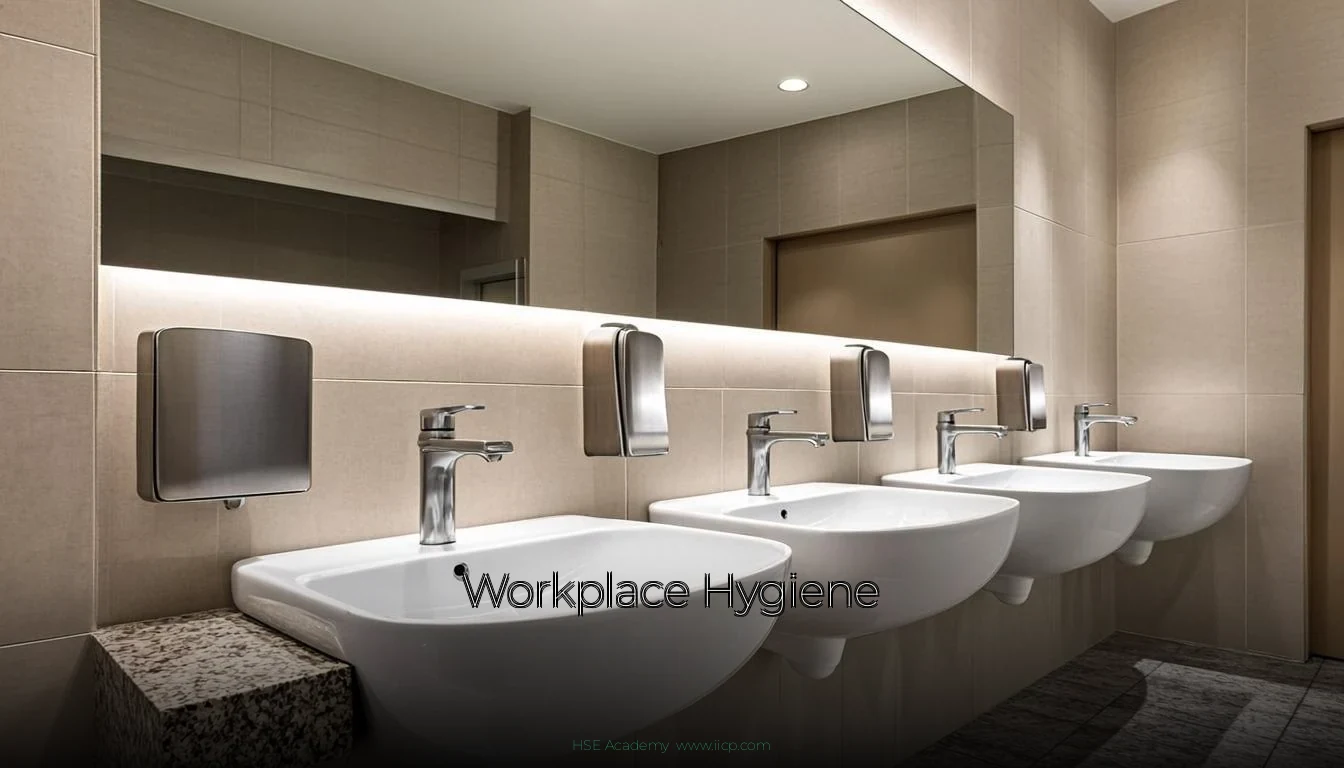
- Washbasins equipped with appropriate handwashing and hand-drying facilities.
- Changing rooms that allow street clothes and workwear to be separated where necessary.
- Showers when the nature of the work or exposure risks make them necessary.
Facilities must be kept in good condition, cleaned regularly and supplied with the necessary consumables. Requirements concerning separation, the number of facilities and their layout must be verified against the regulations applicable to the establishment.
3. Access to Drinking Water
Access to a sufficient supply of drinking water is a fundamental element of workplace hygiene. Employers must, in particular, ensure an adequate supply of drinking water at construction sites, in accordance with Article 281 of the Moroccan Labour Code.
Water points must be accessible, maintained and protected against contamination. Where water comes from a private source or a contamination risk has been identified, appropriate checks may be necessary.
In hot environments or during strenuous physical work, employers must also implement suitable measures to prevent dehydration. Fluid and electrolyte requirements depend on working conditions; mineral supplements are not systematically necessary.
4. Aeration, Ventilation and Lighting
Adequate aeration and ventilation help limit the accumulation of heat, humidity, dust, vapours and other airborne contaminants.
Where work processes release pollutants, appropriate technical controls should be considered, including source extraction where feasible. General ventilation alone may not be sufficient to control hazardous exposure.
Lighting must also be appropriate for the task being performed, providing sufficient visibility while reducing eye strain and the risk of errors or accidents.
5. Waste Management and Sanitation
Waste must be collected, stored and removed according to its nature and the risks it presents. Hazardous, chemical, biological and medical waste may be subject to specific requirements.
Wastewater and wash water must be discharged under appropriate conditions to prevent contamination, unpleasant odours, slips and other workplace hazards.
Containers must be suitable for their intended use, labelled where necessary and properly maintained. Waste management procedures should specify responsibilities, removal frequencies and the precautions to be followed.
Employers’ Obligations in Morocco
In Morocco, Law No. 65-99 on the Labour Code, promulgated by Dahir No. 1-03-194 of 11 September 2003, establishes a framework governing occupational hygiene and workers’ safety.
Title IV of Book II, Articles 281 to 344, addresses workers’ hygiene and safety. Article 281 notably requires employers to maintain workplace cleanliness and ensure the hygiene and sanitary conditions necessary to protect employees’ health. It covers matters including fire prevention, lighting, heating, aeration, ventilation, drinking water, wastewater disposal, dust and vapours, changing rooms and toilet facilities.
The application of these principles must be assessed in light of the relevant implementing regulations. Order No. 93-08 of 12 May 2008 establishes general and specific measures implementing the principles set out in Articles 281 to 291.
Specific obligations vary according to the characteristics of the premises, the processes used and the risks present. Employers must therefore identify the risks associated with their establishments, implement appropriate preventive measures and ensure that these measures are applied.
The Labour Inspectorate is responsible, within its legal remit, for monitoring compliance with labour legislation. Failure to meet legal obligations may result in the sanctions provided for under the applicable legislation.
Sanitary Facilities: Basic Requirements and Precautions
Requirements concerning changing rooms, showers, washbasins and toilets depend on the applicable regulatory framework and the nature of the work performed.
For comparison, in France, Articles R4228-1 and following of the Labour Code govern workplace sanitary facilities. Certain French provisions establish specific requirements for showers in work involving particularly dirty or unhygienic conditions.
These French provisions must not be presented as Moroccan legal requirements. In Morocco, applicable requirements should be verified against the Labour Code and its implementing texts, particularly Order No. 93-08.
Before determining the number of sanitary facilities, their dimensions or cleaning frequency, employers should verify the requirements applicable to their specific establishment.
Health Monitoring and Prevention
Workplace hygiene prevention relies on several complementary measures:
- Workers’ medical monitoring: Organised in accordance with applicable occupational health legislation and taking occupational risks into account.
- Workplace inspections: Checking cleanliness, ventilation, drinking water supplies and the proper functioning of facilities.
- Training and information: Raising awareness of hygiene rules, handwashing, waste management and procedures specific to each job.
- Risk monitoring: Identifying situations that could lead to hazardous exposure or adverse health effects.
- Corrective actions: Addressing identified deficiencies, tracking the measures implemented and verifying their effectiveness.
Responsibility for prevention is shared among the relevant stakeholders. However, employers remain responsible for complying with the obligations imposed on them by applicable legislation.
Good Practices for Businesses
To improve workplace hygiene over the long term, businesses can implement a structured approach:
- Identify hygiene risks in each work area.
- Establish a cleaning programme suited to the premises and activities.
- Regularly inspect sanitary facilities and drinking water points.
- Check ventilation systems and wastewater disposal arrangements.
- Organise waste collection and removal according to waste type.
- Train workers in hygiene practices relevant to their jobs.
- Record deficiencies and monitor the implementation of corrective actions.
These measures should be adapted to actual risks and applicable regulatory requirements rather than applied uniformly across all businesses.
Sources and References
-
International Labour Organization (ILO) — Moroccan Labour Code, Law No. 65-99, particularly Articles 281 to 344 and the associated implementing texts.
https://natlex.ilo.org/dyn/natlex2/r/natlex/fe/details?p3_isn=67319 -
INRS — Occupational Risk Prevention.
https://www.inrs.fr/risques.html -
World Health Organization (WHO) — Occupational Health.
https://www.who.int/health-topics/occupational-health