
Workplace Noise: Sound Exposure, Regulations and Prevention
Exposure to noise in the workplace is one of the main causes of occupational deafness. This article presents regulatory thresholds, hearing PPE and collective prevention measures.
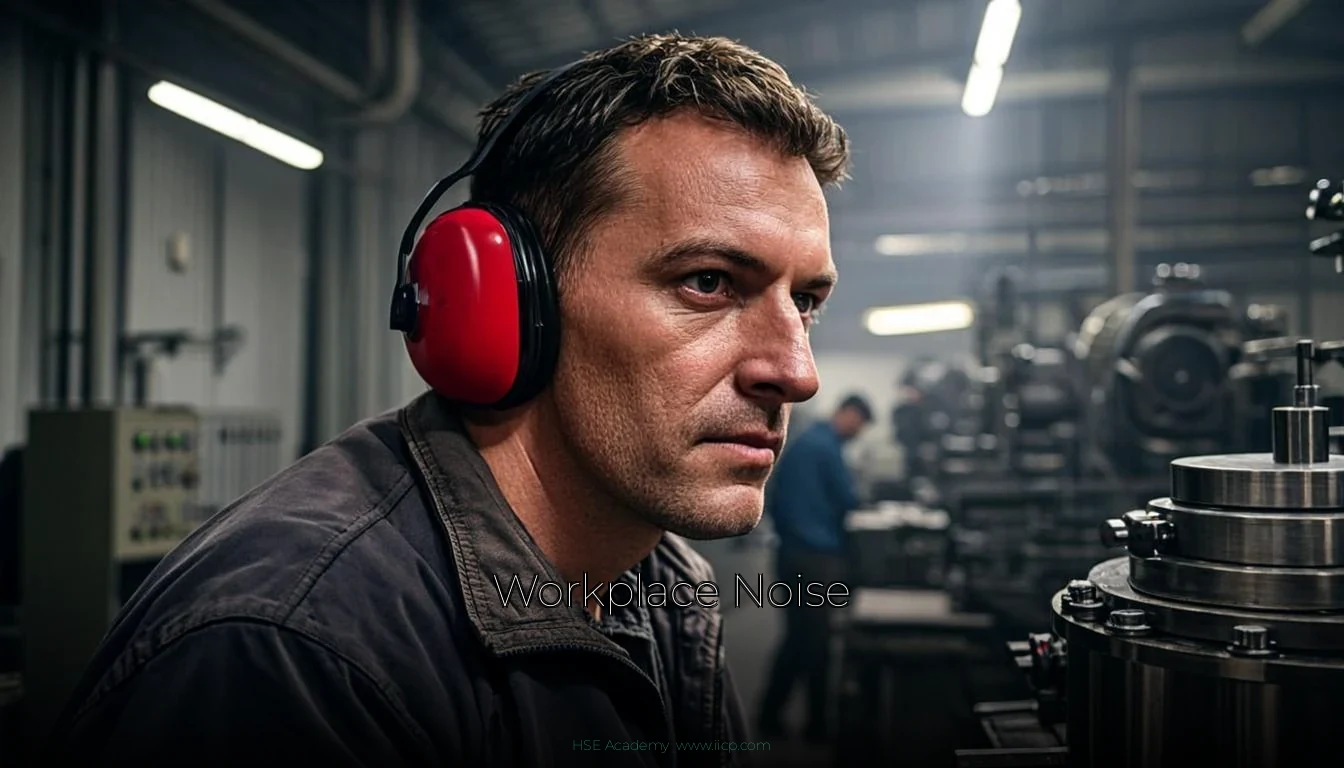
Workplace Noise: Noise Exposure, Regulations and Prevention
Exposure to noise in the workplace can cause irreversible hearing loss, tinnitus and difficulties with concentration. Prevention relies on assessing exposure, reducing noise at its source and selecting appropriate hearing protection.
Prolonged exposure to occupational noise represents a significant risk to workers’ health and safety. It can cause progressive hearing loss, sometimes irreversible, and interfere with communication, concentration and alertness.
Prevention requires identifying noise sources, assessing workers’ actual exposure and implementing appropriate technical, organizational and individual protective measures. Regulatory obligations must be distinguished according to the country concerned.
1. Definition and Measurement of Noise
Sound levels are measured in decibels (dB) using a logarithmic scale. To assess hearing-related risks, occupational noise is commonly measured in A-weighted decibels, expressed as dB(A), which account for the sensitivity of human hearing to different frequencies.
Occupational exposure depends on both the sound level and the duration of exposure. The indicator L_EX,8h represents daily noise exposure normalized to an eight-hour working day.
A proper risk assessment must also consider impulsive or peak noise, such as that produced by certain tools, presses or impact operations. Visual or auditory estimation cannot replace an appropriate assessment and, where necessary, measurements using suitable equipment.
2. Health Effects of Noise
Excessive or repeated exposure to noise can cause several health effects:
- Occupational hearing loss: a progressive reduction in hearing ability that may become irreversible.
- Tinnitus: ringing or buzzing sounds perceived without a corresponding external sound source.
- Fatigue and stress: persistent discomfort, irritability and increased fatigue.
- Concentration and communication difficulties: an increased risk of misunderstanding instructions or failing to detect warning signals.
- Increased accident risk: noise can mask audible warnings and divert attention.
The severity of these effects depends on factors including sound level, exposure duration, frequency of exposure and individual susceptibility.
3. Exposure Limits: Understanding Regulatory Differences
Exposure thresholds depend on the applicable regulatory framework. European reference values should not automatically be presented as legally binding occupational noise limits in Morocco.
European Reference Framework
European Directive 2003/10/EC establishes the following occupational noise exposure values:
- 80 dB(A) over eight hours: lower exposure action value. This triggers measures including the provision of hearing protectors and worker information.
- 85 dB(A) over eight hours: upper exposure action value. This requires stronger noise-reduction measures and the use of hearing protection under the conditions specified by the regulations.
- 87 dB(A) over eight hours: exposure limit value, calculated while taking into account the attenuation provided by hearing protectors.
For peak noise, the European framework also establishes values of 135 dB(C), 137 dB(C) and 140 dB(C), corresponding respectively to the lower action value, upper action value and exposure limit value.
These values are European references. Their direct application depends on the relevant legal framework.
United States Reference Framework
In the United States, the OSHA standard 29 CFR 1910.95 requires an employer hearing conservation program when exposure reaches or exceeds an eight-hour time-weighted average of 85 dB(A). The standard also includes provisions for noise control, audiometric testing and hearing protection.
This US regulation is not a legally binding requirement in Morocco.
Regulatory Framework in Morocco
In Morocco, the Labour Code (Law No. 65-99) establishes the general framework for occupational health and safety obligations. However, European or US exposure thresholds should not be presented as mandatory Moroccan limits without verifying an applicable national legal provision.
Employers must assess workplace risks and implement the necessary preventive measures in accordance with applicable requirements. To establish specific obligations concerning noise levels, measurements, recordkeeping and medical surveillance, the current Moroccan legal texts should be checked and the competent occupational health authorities consulted.
4. Collective Noise Prevention Measures
The priority is to eliminate noise where possible, then reduce it at the source and along its transmission path. Personal protective equipment should not replace feasible collective control measures.
Key measures include:
- Equipment selection: prioritize quieter machines and tools when purchasing or replacing equipment.
- Preventive maintenance: inspect bearings, moving parts, fasteners and pneumatic systems to reduce noise caused by wear or vibration.
- Acoustic enclosures and insulation: install suitable covers or enclosures around noisy equipment.
- Room acoustic treatment: use appropriate sound-absorbing materials to reduce reverberation.
- Separation and distance: isolate noisy machinery from occupied work areas whenever possible.
- Vibration reduction: use suitable anti-vibration devices and correct mechanical defects.
- Work organization: limit exposure duration where this effectively reduces risk, without treating job rotation as a substitute for reducing noise at its source.
After implementing control measures, exposure should be reassessed to verify their effectiveness.
5. Hearing Protection Equipment
When collective measures cannot adequately control the risk, suitable hearing protection must be selected and used in accordance with applicable requirements.
The main types of hearing protectors include:
- Earplugs: made of foam or reusable materials, they are suitable for many working situations.
- Custom-moulded earplugs: designed to fit the user's ears, they can improve comfort when properly fitted.
- Earmuffs: these cover the ears and may be useful in noisy environments or where earplugs are difficult to use.
The EN 352 series of standards covers requirements for different categories of hearing protectors. Selection should take account of noise levels, noise characteristics, wearing duration, compatibility with other protective equipment and working conditions.
The attenuation stated by the manufacturer does not necessarily correspond to the level of protection actually achieved in the workplace. Incorrectly inserted earplugs, poorly fitted earmuffs or interference from other equipment can reduce effectiveness.
Workers should therefore receive appropriate instructions on selecting, fitting, maintaining and replacing their hearing protectors.
6. Medical Surveillance and Prevention of Hearing Loss
Hearing health surveillance should be adapted to the identified risks and the applicable regulatory framework. An occupational health physician can determine which examinations are necessary based on exposure, symptoms and the worker's occupational circumstances.
Audiometry assesses hearing ability and can help detect deterioration. Testing conditions, examination frequency and follow-up arrangements should be determined according to applicable requirements and the advice of the relevant healthcare professional.
Workers who experience ringing, buzzing or new difficulties hearing should promptly report these symptoms to their occupational health service. Suspected work-related hearing loss requires medical assessment. Recognition as an occupational disease depends on the applicable conditions and procedures.
Medical surveillance never replaces technical risk prevention.
7. Good Practices for Employers and Workers
To strengthen workplace noise prevention, employers and workers should:
- Identify workstations and equipment that may generate excessive noise exposure.
- Assess exposure and conduct measurements where necessary.
- Implement technical solutions to reduce noise at its source.
- Establish access and hearing protection rules for hazardous areas.
- Select suitable hearing protectors and train workers in their correct use.
- Maintain machinery regularly and verify the effectiveness of preventive measures.
- Provide appropriate medical surveillance and retain the records required by the applicable regulations.
Conclusion
Workplace noise prevention requires a structured approach: identify noise sources, assess exposure, reduce noise at its source, protect workers and provide appropriate follow-up.
The thresholds of 80, 85 and 87 dB(A) are important references under the European framework, but they should not automatically be attributed to Moroccan regulations. For application in Morocco, legal obligations must be confirmed against the current national legislation.
Sources and References
-
Moroccan Labour Code — Law No. 65-99
International Labour Organization, NATLEX database:
https://natlex.ilo.org/dyn/natlex2/r/natlex/fe/details?p3_isn=67319 -
INRS — Workplace Noise: Regulations and Prevention
https://www.inrs.fr/risques/bruit/reglementation.html -
OSHA — Occupational Noise Exposure, 29 CFR 1910.95
https://www.osha.gov/laws-regs/regulations/standardnumber/1910/1910.95