
Workplace Sanitary Facilities: Employer Hygiene Obligations
Sanitary facilities (toilets, showers, lockers) are mandatory in the workplace. The Labor Code sets equipment, cleanliness and minimum number standards by headcount.
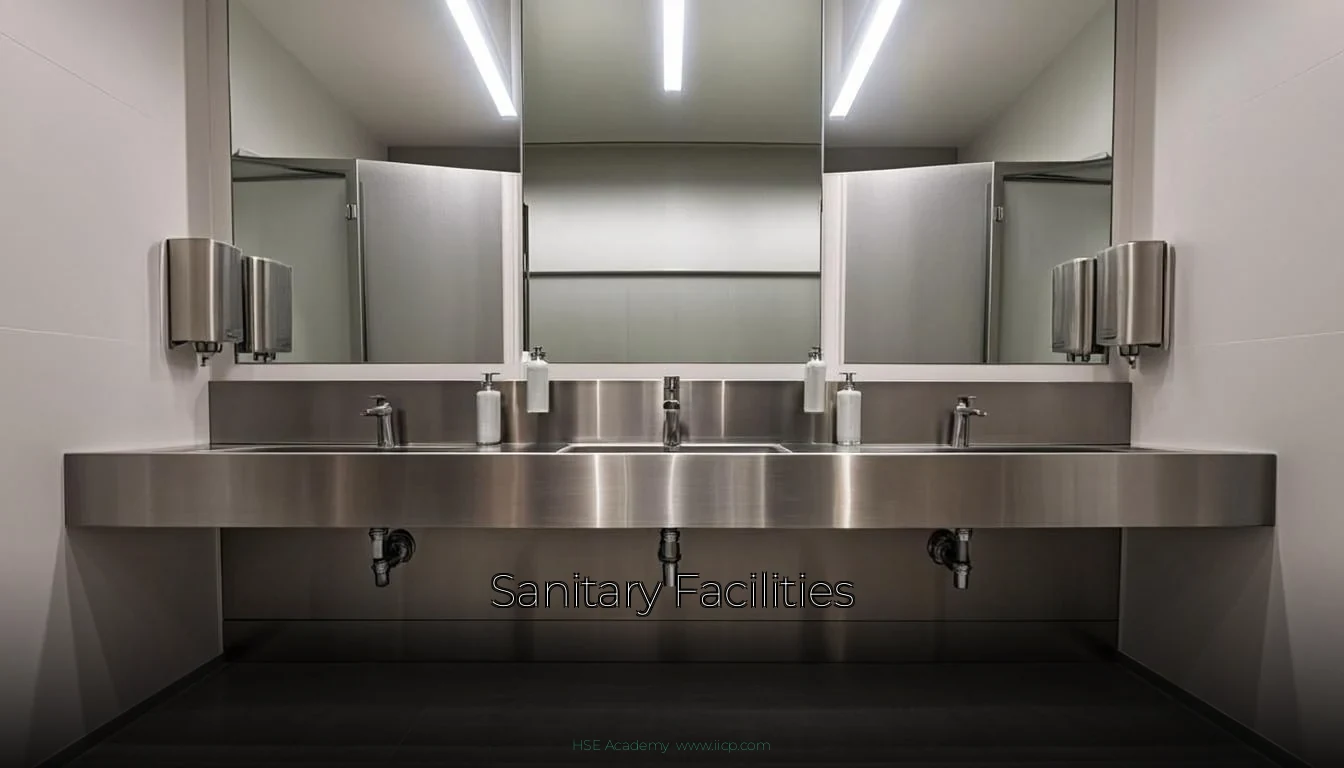
Workplace Sanitary Facilities in Morocco: Employer Obligations
In Morocco, workplace sanitary facilities are governed by the Labour Code and Ministerial Order No. 93-08 of 12 May 2008. These texts establish requirements concerning toilets, washbasins, changing rooms, showers, cleanliness and accessibility.
Sanitary facilities — including toilets, washbasins, changing rooms and showers — help protect employees’ health, prevent contamination risks and ensure dignified working conditions.
In Morocco, employers must comply with the Labour Code, Law No. 65-99, particularly Article 281, as well as Ministerial Order No. 93-08 of 12 May 2008, which specifies general and specific measures for workplace health and safety.
1. General Employer Obligations
Employers must maintain workplace premises in a satisfactory state of cleanliness and provide the hygienic and sanitary conditions necessary to protect employees’ health.
Article 281 of the Labour Code addresses matters including drinking water, sanitary facilities, changing rooms, ventilation and wastewater disposal.
Ministerial Order No. 93-08 sets out requirements applicable to sanitary equipment. Employers must ensure that facilities are properly maintained, accessible and suitable for employees’ needs.
Article 10 of the same Order also provides for appropriate sanitary facilities for employees with disabilities.
2. Toilets: Minimum Numbers and Design Requirements
Article 9 of Ministerial Order No. 93-08 establishes specific requirements for toilets and urinals.
Minimum number of facilities
The Order provides for the following equipment:
- Male employees: at least one toilet and one urinal for every 25 employees.
- Female employees: at least one toilet for every 25 female employees.
- Establishments employing more than 50 women: seated toilets must be made available to pregnant employees.
- Establishments employing more than 25 employees and connected to the public water supply: toilet flushing systems must be automatic, have sufficient capacity and be adjustable.
These ratios must be interpreted in accordance with the regulatory text applicable to the establishment. They should not be replaced by ratios taken from foreign regulations.
Toilet design and layout
Toilets and urinals must:
- not communicate directly with workplace areas;
- be designed and ventilated to prevent unpleasant odours from spreading;
- have adequate lighting;
- use waterproof materials that allow appropriate cleaning;
- be maintained in a consistently clean condition.
In establishments employing both men and women, separate toilet facilities must be provided, subject to the exception specified in the text for offices.
The Order also establishes requirements for toilet cubicles, including doors that can be closed and, where the establishment is connected to the public water supply, flushing systems.
3. Washbasins and Hand Hygiene
Article 7 of Ministerial Order No. 93-08 requires employers to provide employees with the facilities necessary for personal hygiene, including changing rooms and washbasins.
Washbasins must be installed in dedicated rooms separated from workplace areas and located nearby. In establishments employing at least ten employees, the provisions concerning changing-room arrangements also apply.
The facilities must meet the following requirements:
- Water supply: washbasins must be supplied with drinking water.
- Number of taps: the Order provides for at least one tap for every five employees.
- Hygiene supplies: soap and clean towels must be made available to employees.
- Cleanliness: washbasins must be kept in a hygienic condition.
- Separation of facilities: in establishments employing both men and women, changing rooms and washbasins must be separate for male and female employees.
In practice, establishments may use hygienic hand-drying methods suited to the number of users and the conditions of the premises.
4. Showers: When Are They Mandatory?
Article 8 of Ministerial Order No. 93-08 provides for showers in establishments where certain dirty or unhealthy tasks are carried out.
The obligation therefore depends on the nature of the work performed. It would be inaccurate to claim that every business, regardless of its activities, must systematically install showers.
Where showers are required, the facilities must meet several conditions:
- floors and walls must allow effective cleaning;
- the premises must be maintained in a consistently clean condition;
- water temperature must be adjustable.
The text also provides that time spent showering as part of required hygiene measures must be paid at the normal hourly rate and must not be deducted from effective working time.
5. Changing Rooms and Clothing Storage
Changing rooms allow employees to change clothes and store personal belongings under appropriate hygiene and safety conditions.
Under Article 7 of Ministerial Order No. 93-08, changing rooms must, in particular:
- be provided in establishments employing at least ten employees, in accordance with the applicable provisions;
- be separated from workplace areas and located nearby, as required by the text;
- provide sufficient seating and individual lockable lockers;
- be ventilated, adequately lit and maintained in a consistently clean condition;
- be separate for men and women in establishments employing both male and female staff.
The Order also establishes specific arrangements for lockers used to store work clothing that is soiled, malodorous or contaminated with hazardous substances. These lockers must have a dedicated compartment and be cleaned at least once a week.
In activities involving exposure to chemicals or biological agents, changing-room arrangements must also take occupational risk assessments into account to reduce cross-contamination.
6. Cleaning and Disinfection of Sanitary Facilities
Article 4 of Ministerial Order No. 93-08 requires workplace premises to be maintained in a consistently clean condition and provides that floors in establishments must be thoroughly cleaned at least once a day.
Requirements applicable to sanitary facilities must be incorporated into the cleaning arrangements. Additional cleaning frequency should be determined according to occupancy, the nature of the activity and identified risks.
Good cleaning practices include:
- regularly cleaning toilets, washbasins, showers, floors and frequently touched surfaces;
- disinfecting surfaces when risks or hygiene procedures justify it;
- removing waste and replenishing consumables;
- checking plumbing, ventilation and wastewater disposal systems;
- reporting and correcting leaks, mould, persistent odours and defective equipment.
Systematic disinfection after every use is not a universal requirement for all businesses. Cleaning methods and frequencies must reflect actual conditions of use and any sector-specific requirements.
The Order also provides that, in establishments employing more than 100 employees, an employee must be designated to clean toilets and urinals.
7. Drinking Water, Ventilation and Wastewater Disposal
Article 281 of the Labour Code establishes hygiene and sanitation requirements necessary to protect employees’ health, including provisions relating to drinking water and wastewater disposal.
Preventive measures should include:
- ensuring an adequate supply of drinking water for the relevant uses;
- maintaining sanitary equipment in proper working order;
- preventing leaks and standing water;
- ensuring effective wastewater disposal;
- controlling odours from drains and wastewater systems;
- providing adequate air renewal in enclosed sanitary areas to reduce unpleasant odours and condensation.
Article 6 of Ministerial Order No. 93-08 contains provisions concerning watertight drainage pipes and the prevention of emissions from sewers and cesspits.
The choice of equipment and ventilation systems must take account of the layout of the premises and the applicable regulatory requirements.
8. Accessibility of Sanitary Facilities
Article 282 of the Labour Code provides that workplace premises must be arranged to facilitate the work of employees with disabilities and ensure their safety.
Article 2 of Ministerial Order No. 93-08 specifies that employees with disabilities must be able to access their workstations and the sanitary and catering facilities they may need to use.
Article 10 also requires appropriate sanitary facilities.
Employers must therefore consider users’ needs when designing access routes and equipment, in accordance with the applicable provisions.
9. Regulatory Compliance and Inspections
Employers must verify that their establishments comply with the Labour Code and the regulations applicable to their activities.
For an inspection or internal audit, the following points should be checked:
- the number of toilets, urinals and taps against the applicable regulatory ratios;
- separation of facilities wherever required;
- the availability of showers where the nature of the work makes them mandatory;
- the cleanliness of toilets, washbasins, showers and changing rooms;
- the availability of drinking water, soap and hand-drying supplies;
- the condition of plumbing, ventilation and drainage systems;
- accessibility of sanitary facilities;
- cleaning arrangements and the correction of identified defects.
The labour inspectorate may monitor compliance with the obligations falling within its remit, in accordance with the applicable legal framework.
Conclusion
Workplace sanitary hygiene is an essential component of occupational risk prevention and employee health protection.
In Morocco, the Labour Code, particularly Article 281, and Ministerial Order No. 93-08 of 12 May 2008 establish key employer obligations concerning sanitary facilities, cleanliness, equipment and accessibility.
Compliance involves more than simply providing toilets. It also requires compliance with applicable equipment ratios, proper maintenance, access to hygiene supplies and facilities adapted to employees’ needs.
Sources and References
-
General Secretariat of the Government of Morocco — Official Bulletin No. 5680: Ministerial Order No. 93-08 of 12 May 2008.
https://www.sgg.gov.ma/BO/bo_fr/2008/bo_5680_fr.pdf -
WIPO Lex — Moroccan Labour Code, Law No. 65-99.
https://www.wipo.int/wipolex/fr/legislation/details/7371