
ATEX: Preventing Explosions in Explosive Atmospheres
Explosive atmospheres (ATEX) form when flammable gases, vapors or dust mix with air. ATEX regulations require strict prevention measures in risk zones.
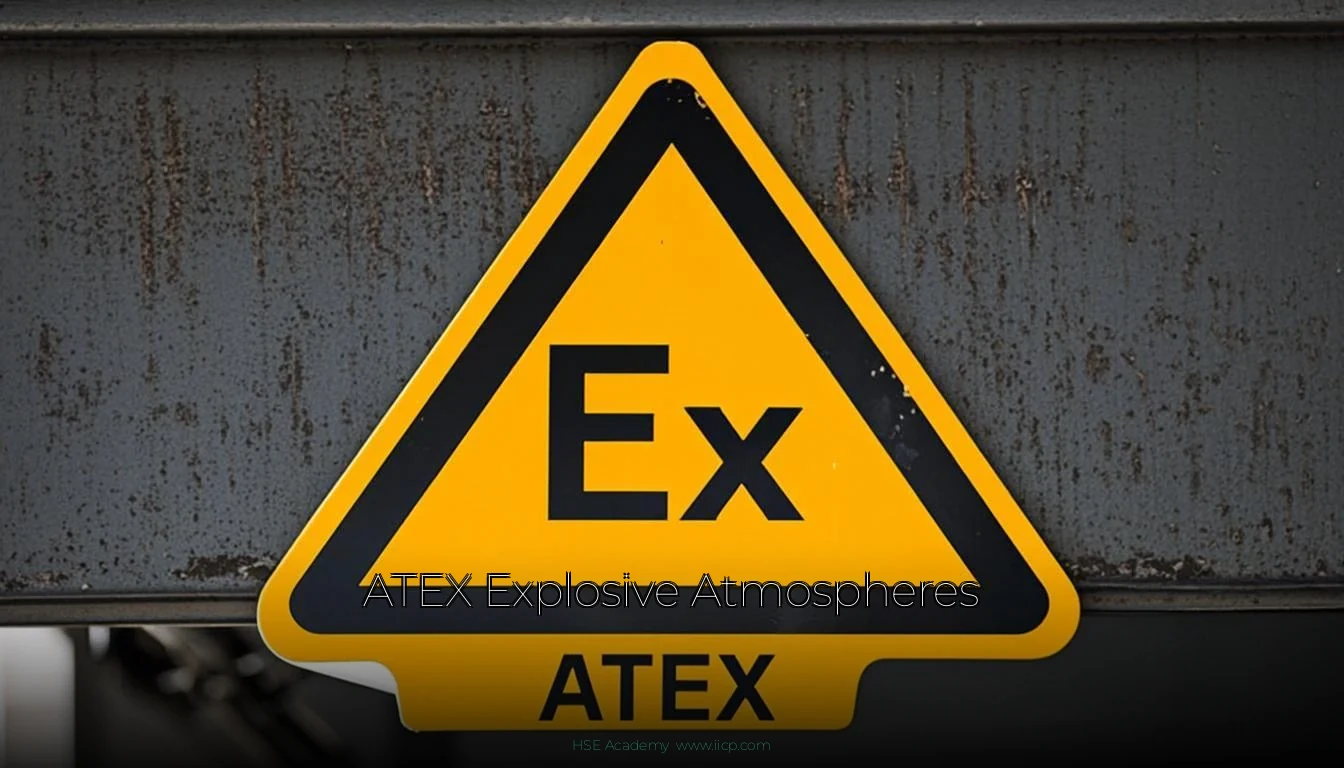
ATEX: Prevention of Explosive Atmospheres in the Workplace
Explosive atmospheres (ATEX) can form when flammable gases, vapours, mists or combustible dusts mix with air in proportions that allow an explosion to occur in the presence of an ignition source. Prevention relies on risk assessment, control of ignition sources and the selection of suitable equipment.
Explosive atmospheres pose a major risk in many industrial sectors, including chemicals, petrochemicals, food processing, pharmaceuticals and the wood industry. A spark, hot surface or electrostatic discharge can trigger an explosion when the necessary conditions are present.
Prevention is based on several principles: preventing the formation of an explosive atmosphere, avoiding its ignition and, where the risk cannot be completely eliminated, limiting the consequences of a potential explosion.
Two European directives specifically address this area: Directive 1999/92/EC, concerning the protection of workers, and Directive 2014/34/EU, concerning equipment and protective systems intended for use in potentially explosive atmospheres. Their applicability depends on the relevant legal framework.
1. Definition of an Explosive Atmosphere
An explosive atmosphere is a mixture of air and flammable or combustible substances—in the form of gases, vapours, mists or dusts—in which, after ignition, combustion can propagate throughout the unburned mixture.
For gases and vapours, the explosion risk depends notably on the concentration of the fuel in the air. Two limits are distinguished:
- Lower Explosive Limit (LEL): the minimum concentration below which the mixture is generally too lean in fuel to propagate an explosion.
- Upper Explosive Limit (UEL): the concentration above which the mixture is generally too rich in fuel to propagate an explosion.
These limits vary according to the substance and physical conditions. Combustible dusts also have explosive properties that must be determined using relevant data and, where necessary, specific testing.
2. How Do Explosive Atmospheres Form?
Hazardous situations may arise from the following:
- Flammable gases and vapours: leaking pipes, defective seals, solvent evaporation or hydrocarbon emissions.
- Flammable mists: spraying or leakage of combustible liquids in the form of fine droplets under conditions that allow ignition.
- Combustible dusts: airborne flour, grain, sugar, wood dust or certain metals, particularly aluminium and magnesium.
- Dust accumulation: deposits that may become airborne again and form an explosive cloud.
The presence of a flammable substance does not automatically mean that an explosive atmosphere exists. Its concentration, dispersion, ventilation and physical properties must all be considered.
3. Classification of ATEX Zones
Under the European framework for explosion prevention, hazardous locations are classified into zones according to the frequency and duration of the presence of an explosive atmosphere.
Gases, Vapours and Mists
- Zone 0: an explosive atmosphere is present continuously, for long periods or frequently.
- Zone 1: an explosive atmosphere is likely to occur occasionally during normal operation.
- Zone 2: an explosive atmosphere is unlikely to occur during normal operation and, if it does occur, will exist only for a short period.
Combustible Dusts
- Zone 20: an explosive atmosphere in the form of a dust cloud is present continuously, for long periods or frequently.
- Zone 21: an explosive atmosphere is likely to occur occasionally during normal operation.
- Zone 22: an explosive atmosphere is unlikely to occur during normal operation and, if it does occur, will exist only for a short period.
Zone classification must be carried out by competent personnel based on the substances involved, processes, emission sources, ventilation and operating conditions. It must not be determined solely by the industrial sector.
4. Prevention and Protection Measures
The prevention strategy should follow a hierarchy consistent with the identified risks.
4.1. Prevent the Formation of an Explosive Atmosphere
Where technically feasible, emissions of flammable or combustible substances should be reduced or eliminated.
Measures may include:
- Replacing a substance with a less hazardous alternative where feasible.
- Preventing leaks and maintaining the integrity of installations.
- Capturing emissions as close as possible to their source.
- Providing ventilation designed and maintained for the identified risk.
- Regularly cleaning dust deposits using methods that prevent dangerous dispersion.
4.2. Avoid Ignition Sources
Ignition sources must be identified and controlled, including:
- Electrical and mechanical sparks.
- Hot surfaces.
- Static electricity and electrostatic discharges.
- Open flames and hot-work activities.
- Equipment that may generate sparks or excessive temperatures.
- Chemical reactions and other phenomena that may cause dangerous heating.
Control measures may include grounding and equipotential bonding, the use of suitable equipment, temperature control and appropriate supervision of maintenance activities.
4.3. Use Inerting Where Appropriate
Inerting involves modifying the composition of an atmosphere, for example by reducing its oxygen concentration using an inert gas, to prevent combustion under the conditions established by the safety assessment.
This technique requires appropriate design and monitoring. Nitrogen and argon can create oxygen-deficient atmospheres and present an asphyxiation hazard. Monitoring systems, intervention procedures and protective measures must therefore be adapted to the circumstances.
4.4. Limit the Consequences of an Explosion
Where the residual risk justifies it, explosion protection systems may be required, including:
- Explosion relief vents designed for the specific installation.
- Explosion suppression systems.
- Explosion isolation devices that prevent an explosion from propagating to other equipment.
- Installation design and equipment selection suitable for the expected pressure and temperature effects.
These systems must be designed, sized and installed by competent personnel. An incorrectly directed explosion vent can itself expose workers to serious hazards.
4.5. Organise Work Activities
Organisational measures may include:
- Written procedures appropriate to hazardous operations.
- Isolation and lockout of energy sources before certain interventions.
- Work permits where required by the risk assessment or applicable rules.
- Controls for hot-work activities.
- Personnel training.
- Hazard-zone signage and emergency arrangements.
5. Equipment for Explosive Atmospheres
Equipment used in an ATEX zone must be suitable for the type of atmosphere, zone classification, operating conditions and ignition risks.
Under European Directive 2014/34/EU, equipment intended for surface industries is divided into protection categories. The appropriate category depends notably on the zone.
| Zone | Generally suitable categories under the European framework |
|---|---|
| 0 or 20 | Category 1 |
| 1 or 21 | Categories 1 or 2 |
| 2 or 22 | Categories 1, 2 or 3 |
This table provides general guidance. The final selection must also account for the substance type, equipment group, protection characteristics and actual operating conditions.
Understanding Equipment Marking
Marking on equipment intended for explosive atmospheres may specify:
- Equipment group: Group I for certain mining applications and Group II for other relevant industries.
- Equipment category: the protection level corresponding to its intended use.
- Type of protection: for example, intrinsic safety “Ex i”, flameproof enclosure “Ex d” or increased safety “Ex e”, depending on the equipment and application.
- Gas group: IIA, IIB or IIC for relevant equipment, according to the characteristics of the gases.
- Temperature class: T1 to T6 for relevant markings, indicating a defined maximum surface temperature under the applicable classification system.
Dust-related markings are not identical to those used for gases. The complete marking, certificates and manufacturer's instructions must therefore be checked rather than relying solely on the presence of the “Ex” symbol.
Under the European framework, the applicable regulatory marking and conformity assessment must also be verified. Outside this framework, requirements depend on national legislation, applicable standards and contractual conditions.
6. European ATEX Regulations
Two complementary European directives cover different aspects of explosion prevention.
Directive 1999/92/EC: Protection of Workers
This directive establishes minimum requirements for improving the health and safety protection of workers potentially exposed to explosive atmospheres.
Within its scope, it addresses:
- Explosion risk assessment.
- Classification of hazardous locations into zones.
- Implementation of prevention and protection measures.
- Worker training.
- Signage for relevant hazardous locations where required.
- Preparation and updating of the Explosion Protection Document (EPD), known in French as the Document relatif à la protection contre les explosions (DRPCE).
Directive 2014/34/EU: Equipment and Protective Systems
This directive concerns equipment and protective systems intended for use in explosive atmospheres and their placing on the European market.
It establishes the essential health and safety requirements and conformity assessment procedures applicable to products within its scope.
It has applied since 20 April 2016 and replaced Directive 94/9/EC. The European Commission published the sixth edition of its guidelines on the application of this directive in January 2026.
The two directives therefore serve different purposes: one primarily addresses the prevention of risks to workers, while the other addresses the conformity of relevant equipment.
7. Application in Morocco
In Morocco, occupational risk prevention falls, in particular, under Law No. 65-99 establishing the Labour Code. The provisions on occupational hygiene and safety include general prevention requirements.
However, general workplace safety principles must be distinguished from technical requirements specific to ATEX risks. European directives, the EPD and European equipment-marking rules must not automatically be presented as binding Moroccan legal obligations.
Depending on the installation and activity, other legislation, sector-specific requirements, Moroccan standards or permit conditions may also be relevant. Their applicability should be verified with the competent authorities and against the official texts in force.
For a Moroccan company supplying equipment to the European market, European conformity requirements may apply to the products concerned. For a company operating an installation in Morocco, the prevention strategy should start with the applicable national obligations and an assessment of the actual risks.
In practice, companies should:
- Carry out a documented explosion risk assessment.
- Identify flammable substances and combustible dusts present.
- Determine hazardous zones with the support of competent personnel.
- Select equipment suitable for the operating conditions.
- Establish maintenance and intervention procedures.
- Train workers and regularly verify the effectiveness of preventive measures.
8. Industrial Sectors Concerned
ATEX risks may arise in many sectors, including:
- Chemicals and petrochemicals: solvents, gases and flammable liquids.
- Oil refining and hydrocarbon storage: gas and vapour emissions.
- Food processing: silos, flour mills and facilities handling combustible powders.
- Pharmaceuticals: solvents and powders capable of forming explosive clouds.
- Woodworking: sawdust, sanding dust and dust extraction operations.
- Metallurgy and recycling: combustible metal dusts and processes that generate ignition sources.
Major industrial accidents, including the AZF factory explosion in Toulouse in 2001 and the Buncefield oil depot explosion in 2005, illustrate the potential severity of industrial explosions. However, the scenarios, causes and lessons from these events must be considered individually: not every industrial accident necessarily involves the same ATEX mechanism.
Conclusion
Preventing explosions in potentially explosive atmospheres requires a structured approach: identifying hazardous substances, assessing explosion scenarios, preventing the formation of explosive atmospheres wherever possible, controlling ignition sources and limiting the consequences of an incident.
Zone classification and equipment selection must be carried out by competent personnel, based on actual risks and the applicable regulatory framework. In Morocco, it is essential to distinguish national legal obligations from European directives and international technical recommendations.
Sources and References
-
French National Research and Safety Institute (INRS) — Workplace explosions: regulations and reference texts
https://www.inrs.fr/risques/explosion/reglementation-textes-reference.html -
European Commission — Equipment for potentially explosive atmospheres (ATEX)
https://single-market-economy.ec.europa.eu/sectors/mechanical-engineering/equipment-potentially-explosive-atmospheres-atex_en -
International Labour Organization — Moroccan Labour Code, Law No. 65-99
https://natlex.ilo.org/dyn/natlex2/r/natlex/fe/details?p3_isn=67319