CNSS Morocco: Health Insurance and Occupational Accidents
CNSS (Caisse Nationale de Sécurité Sociale) manages mandatory health insurance and benefits for occupational accidents and diseases in Morocco. This article presents the framework, obligations and benefits.
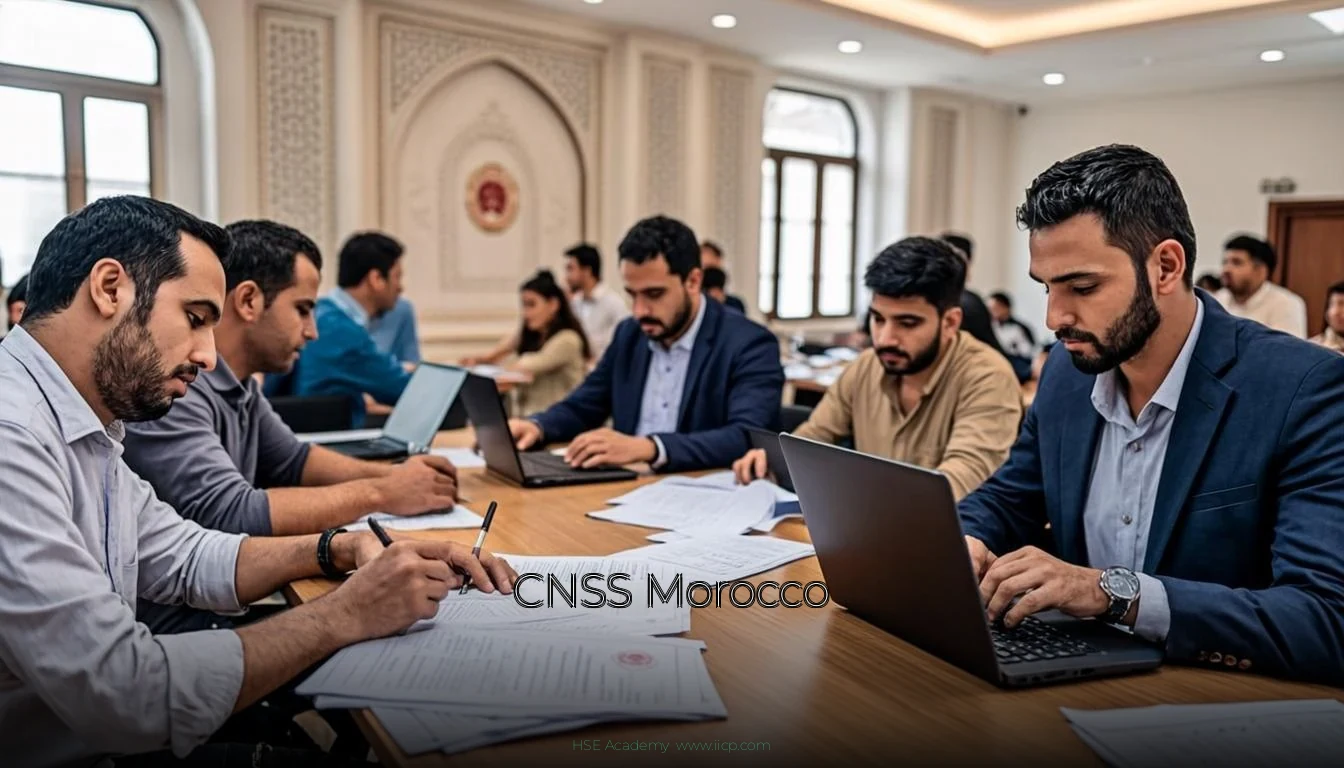
CNSS Morocco: Health Insurance and Occupational Accidents
The National Social Security Fund (Caisse Nationale de Sécurité Sociale, CNSS) plays a central role in Morocco's social protection system. It manages the Compulsory Health Insurance scheme (Assurance Maladie Obligatoire, AMO) for employees covered by the private-sector social security regime, as well as various social benefits.
However, occupational accidents and occupational diseases are covered by a separate legal and insurance framework. Understanding this distinction helps employers comply with their obligations and enables employees to better understand their rights.
1. What is the role of the CNSS in Morocco?
The National Social Security Fund (CNSS) is a public institution responsible for administering the social security regime applicable, in particular, to employees and certain categories of self-employed workers.
Its responsibilities include:
- Managing compulsory health insurance for categories of insured persons covered by its scheme.
- Paying family allowances, subject to the applicable eligibility conditions.
- Paying certain sickness and maternity cash benefits.
- Managing old-age pensions, disability pensions and certain death-related benefits, in accordance with the law.
- Registering insured persons and managing salary declarations and social security contributions.
The CNSS operates within the framework of Moroccan social security legislation.
It should be distinguished from the CNOPS, which historically managed compulsory health insurance for certain categories of public-sector employees. The applicable scheme depends on the insured person's category and the rules in force.
2. Mandatory registration with the CNSS
An employer covered by the relevant social security regime must register with the CNSS no later than 30 days after hiring their first employee.
The employer's principal obligations include:
- Registering the company with the CNSS.
- Registering the employees concerned.
- Regularly declaring salaries and days worked.
- Calculating, declaring and paying the social security contributions due within the applicable deadlines.
- Checking the accuracy of the information submitted to the CNSS.
- Keeping the employment records and supporting documents necessary to demonstrate compliance with social security obligations.
Failure to register, failure to declare employees or non-payment of contributions may result in adjustments, surcharges, penalties or other consequences provided for by law.
The precise obligations depend on the social security regime applicable to the employer and the employees concerned.
3. Social security contributions: understanding the different categories
Social security contributions are calculated according to the rules applicable to each branch of the social security system. Some contributions are paid by the employer, while others are shared between the employer and the employee.
The principal branches include:
Compulsory Health Insurance (AMO)
AMO contributes towards eligible healthcare expenses covered by the applicable scheme, including medical consultations, reimbursable medicines, laboratory tests, hospitalisation and other covered treatments.
Coverage depends on eligibility, reference tariffs, applicable limits and reimbursement rules.
Family benefits
The CNSS pays family allowances to insured persons who meet the legal requirements, including applicable conditions relating to declared employment, contributions and dependent children.
Sickness and maternity benefits
Subject to affiliation and contribution requirements, employees may qualify for cash benefits during periods of incapacity for work due to illness or during maternity leave.
Old-age and disability pensions
The CNSS also manages retirement benefits and certain disability pensions, subject to the specific eligibility requirements applicable to each benefit.
Important: Contribution rates must be checked against the official schedules in force. A single rate should not be presented as applicable to every company or every branch of the social security system.
4. Compulsory health insurance benefits
AMO covers healthcare services included in the applicable scheme when the insured person and their dependants meet the relevant eligibility conditions.
Depending on the rules in force, covered services may include:
- Medical consultations.
- Eligible laboratory tests and diagnostic imaging.
- Medicines included on the reimbursable medicines list.
- Maternity-related healthcare.
- Covered hospital stays and medical or surgical procedures.
- Certain medical devices and paramedical services.
Reimbursement is not necessarily complete. It depends on factors such as the national reference tariff, the type of treatment and the applicable coverage conditions.
Insured persons should consult the CNSS's official information to confirm current reimbursement rules and the procedures required for their claims.
5. Maternity: leave and cash benefits
In Morocco, statutory maternity leave under the Labour Code is distinct from benefits paid by the CNSS.
The statutory maternity leave period is generally 14 weeks, in accordance with the applicable provisions of the Labour Code.
Subject to contribution and eligibility requirements, an employee may also qualify for maternity cash benefits paid by the CNSS.
Three separate elements should therefore be distinguished:
- The legal right to maternity leave.
- The payment or maintenance of remuneration under the applicable rules.
- Maternity cash benefits paid by the CNSS when the legal conditions are met.
The employer and employee should verify the declaration procedures and supporting documents required for the claim.
6. Occupational accidents and diseases: a separate insurance framework
Coverage for occupational accidents and occupational diseases must not be confused with the AMO scheme managed by the CNSS.
In Morocco, Law No. 18-12 on compensation for occupational accidents, which entered into force on 22 January 2015, governs matters including accident reporting, insurance, benefits payable to victims and compensation procedures.
Employers must take out the compulsory insurance covering occupational accidents and diseases with an authorised insurance company, in accordance with the applicable rules.
Depending on the legal conditions, this coverage may include:
- Medical and pharmaceutical expenses related to the accident.
- Hospitalisation expenses.
- Daily allowances during temporary incapacity for work.
- A pension or lump-sum payment in cases of permanent incapacity, subject to the applicable conditions.
- Benefits for eligible dependants in the event of the victim's death.
The benefits payable and their calculation depend on the medical circumstances, compensation rules and applicable legislation.
7. Reporting an occupational accident in Morocco
Occupational accidents must be reported in accordance with the procedures and deadlines established by Moroccan law.
The employer must report the accident to their insurer within the applicable legal deadline. Information published by the French Centre for European and International Liaisons on Social Security (CLEISS) indicates a maximum period of five days for reporting the accident to the insurer.
In practice, the employer should:
- Take urgent measures to protect the injured person and arrange emergency assistance.
- Obtain the required medical documentation.
- Notify the relevant persons and organisations in accordance with the applicable procedure.
- Report the accident to the insurer within the required deadline.
- Keep supporting documents and follow up on the claim until it has been processed.
Additional formalities, including those involving the competent authorities or labour inspectorate, must be verified against Law No. 18-12 and the circumstances of the accident.
Employees should retain their medical records, supporting documents and any claim reference numbers provided to them.
8. Occupational diseases
An occupational disease is an illness linked to exposure to a workplace hazard under the conditions established by the applicable regulations.
Recognition depends on the relevant occupational disease rules, available medical and employment evidence, and any applicable regulatory disease schedules.
When a disease may be work-related, it is important to:
- Obtain the appropriate medical documentation.
- Document the employee's job history and relevant occupational exposures.
- Follow the applicable reporting and recognition procedures.
- Notify the insurer and relevant organisations where required by law.
Occupational diseases should not automatically be treated as ordinary healthcare reimbursement claims under AMO. Their compensation is governed by the legal framework applicable to occupational risks.
9. Occupational risk prevention and employer responsibilities
Insurance coverage does not exempt employers from their occupational health and safety obligations.
Employers must comply with the applicable provisions of the Labour Code, identify work-related hazards, implement appropriate preventive measures and provide personal protective equipment where required by law.
A structured prevention programme may include:
- Identifying and assessing occupational risks.
- Implementing collective and individual preventive measures.
- Providing employees with safety information and training.
- Monitoring incidents and accidents.
- Investigating causes and implementing corrective actions.
- Monitoring the regulatory obligations applicable to the establishment.
An occupational health and safety management system, such as one based on ISO 45001, can help an organisation structure its prevention programme. However, certification does not automatically reduce occupational accident insurance premiums. Any premium adjustment depends on the insurance contract and the insurer's applicable pricing rules.
Conclusion
The CNSS is a central institution in Morocco's social protection system, particularly for compulsory health insurance, family benefits and several cash benefits and pensions.
However, compulsory health insurance and insurance covering occupational accidents and occupational diseases are two distinct systems. Employers must fulfil their CNSS registration and reporting obligations while also maintaining the compulsory insurance covering occupational risks and implementing the preventive measures required by law.
Understanding these different systems helps employers manage their social security obligations and enables employees to understand the procedures for claiming their rights.
Sources and references
-
CNSS Morocco — Official website:
https://www.cnss.ma/ -
CLEISS — Moroccan social security system:
https://www.cleiss.fr/docs/regimes/regime_maroc.html -
CLEISS — Social security contributions in Morocco:
https://cleiss.fr/docs/cotisations/maroc.html -
International Labour Organization — NATLEX: Moroccan Law No. 18-12 on compensation for occupational accidents:
https://natlex.ilo.org/dyn/natlex2/r/natlex/fe/details?cs=1oq5cjJJWfY1kNv2IfsdXilm3_OQu0z75R5d6P5hbKSwVOBi-efqQ7xfjN81ie-bNjnCdtXAI5V2RwVcFcIapTA&p3_isn=104164 -
General Secretariat of the Government — Moroccan Labour Code:
https://www.sgg.gov.ma/Portals/0/lois/code_travail_fr.pdf -
International Labour Organization — Convention No. 121 on Employment Injury Benefits:
https://normlex.ilo.org/dyn/normlex/en/f?p=NORMLEXPUB:12100:0::NO::P12100_ILO_CODE:C121