
Confined Space Work: Risks, Atmosphere and HSE Prevention
Confined spaces (pits, tanks, sewers, silos) present specific risks: deficient atmosphere, suffocation, drowning. Regulations require a work permit and strict prevention measures.
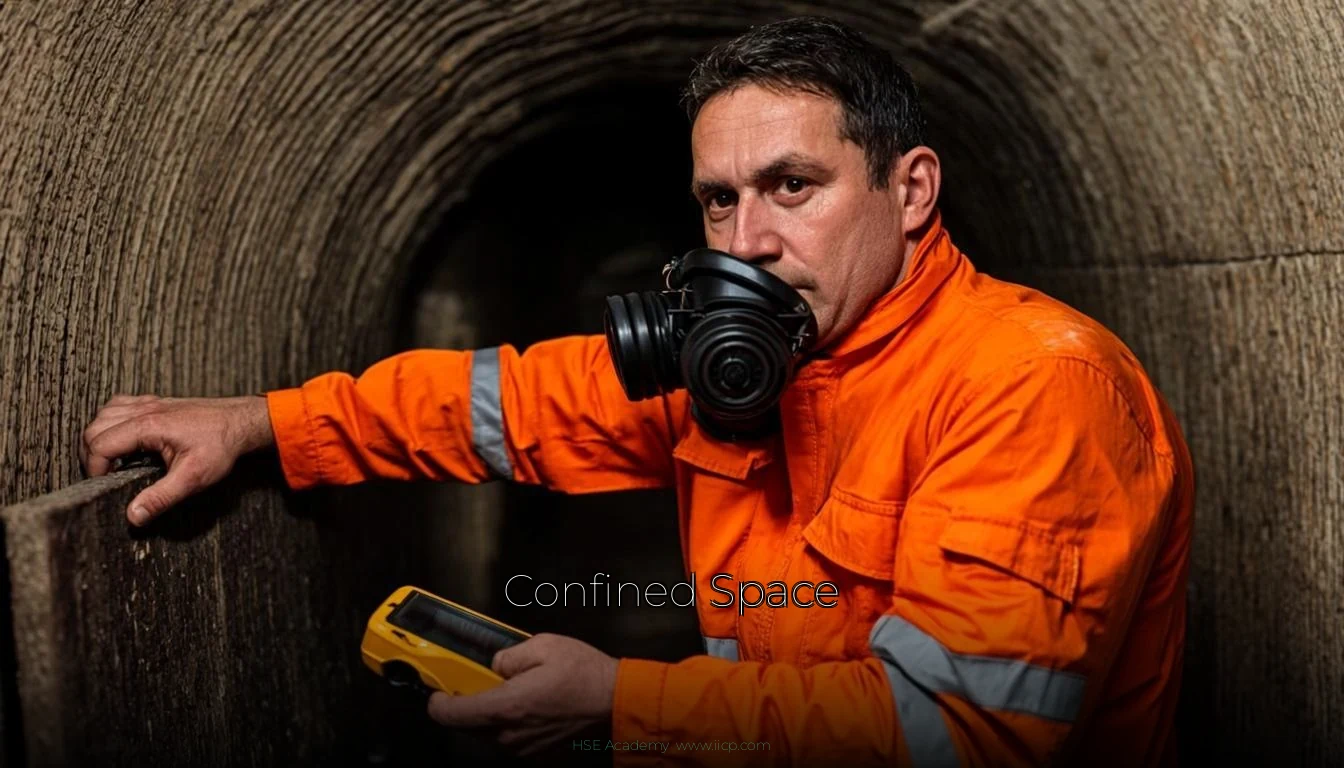
Working in Confined Spaces: Risks, Atmospheric Hazards and HSE Prevention
1. What Is a Confined Space?
A confined space is an enclosed or partially enclosed area that is not designed for permanent occupancy but must occasionally be entered to perform work, maintenance, inspection or cleaning. Its configuration, location, ventilation, contents, equipment or work activities may expose workers to serious hazards.
Examples include:
- Tanks, cisterns and storage vessels.
- Sewers, drains and underground chambers.
- Silos, hoppers and industrial reactors.
- Underground pits, tunnels and certain technical ducts.
- Some boilers, containers and process equipment.
Not every confined space presents the same level of risk. A specific risk assessment must be carried out before work begins.
2. The Main Risks Associated with Confined Spaces
2.1. Atmospheric Hazards
The atmosphere inside a confined space can become dangerous because of oxygen depletion or enrichment, the presence of toxic gases, or the accumulation of flammable substances.
The main hazards include:
- Oxygen deficiency: may cause impaired judgment, loss of consciousness and death. Normal atmospheric air contains approximately 20.9% oxygen. An oxygen concentration below 19% is already considered an atmospheric anomaly by the French National Research and Safety Institute (INRS). Applicable alarm and entry thresholds must be established according to the relevant regulations, risk assessment and site procedures.
- Oxygen enrichment: increases the risk and severity of fire because materials can ignite more easily and burn more intensely.
- Hydrogen sulphide (H₂S): a highly toxic gas that may be present in sewers, wastewater systems and certain industrial processes.
- Carbon monoxide (CO): a toxic, colourless and odourless gas that may be generated by combustion processes.
- Solvent vapours: may cause acute poisoning, irritation or other health effects. Depending on their properties and concentration, they may also create a fire or explosion risk.
- Methane (CH₄): a flammable and potentially explosive gas. It can also displace oxygen, creating an asphyxiation hazard.
The atmosphere may change during the work. A single measurement taken before entry is therefore not always sufficient.
2.2. Physical and Mechanical Hazards
Workers may also be exposed to:
- Falls from height or into pits.
- Slips, trips and falls on wet or contaminated surfaces.
- Engulfment or burial by bulk materials.
- Unexpected movement or operation of machinery.
- Electrical hazards.
- High temperatures, humidity and thermal stress.
- Difficult access and restricted movement.
2.3. Rescue and Emergency Hazards
Confined spaces can make emergency response particularly difficult. Narrow access points, poor visibility, hazardous atmospheres and limited room for manoeuvring can prevent a rapid rescue.
An attempted rescue without appropriate equipment and training may expose additional workers to the same danger.
3. Risk Assessment Before Entry
Before authorising work in a confined space, the employer or responsible site personnel should assess the hazards associated with the location, the task, the equipment and the surrounding processes.
The assessment should consider:
- The nature of the space and its access points.
- Previous contents, residues and possible contaminants.
- Oxygen levels and the potential presence of toxic or flammable gases.
- Connected pipes, ducts, machinery and other sources of hazardous energy.
- The work to be performed, including welding, cleaning or the use of chemicals.
- Ventilation requirements and the possibility of changing atmospheric conditions.
- Communication, emergency arrangements and rescue accessibility.
The assessment must be reviewed if the work conditions change or a new hazard is identified.
4. Entry Authorisation and Work Procedures
A documented entry procedure and a confined-space entry permit are important risk-control measures. They help ensure that the hazards have been assessed, the required precautions are in place and the work has been authorised by a competent person.
However, a confined-space entry permit should not be described as a universally mandatory legal requirement under Moroccan law without checking the legislation applicable to the particular activity, facility and sector. Specific legal, contractual or site requirements may make it compulsory.
Depending on the risk assessment, the procedure should specify:
- The work to be carried out and its authorised duration.
- The personnel authorised to enter.
- Isolation and lockout requirements.
- Atmospheric testing and monitoring arrangements.
- Ventilation and personal protective equipment.
- The duties of the attendant outside the space.
- Communication methods and emergency procedures.
- The conditions requiring work to stop and personnel to evacuate.
No worker should enter until the required controls have been verified.
5. Atmospheric Testing and Monitoring
Atmospheric testing is a fundamental preventive measure.
5.1. Before Entry
A suitable, properly maintained gas detector should be used to assess the atmosphere before entry. Depending on the identified hazards, testing may include:
- Oxygen concentration.
- Flammable gases and vapours.
- Specific toxic gases, such as H₂S or CO.
- Other contaminants relevant to the process and materials present.
Measurements should be taken at different levels where necessary because gases may accumulate differently depending on their density, temperature, ventilation and the geometry of the space.
5.2. During Work
Atmospheric conditions can change as a result of the work itself, the release of residues, a process disturbance or ventilation failure.
Continuous monitoring or repeated measurements should therefore be selected according to the risk assessment and the applicable procedure.
Gas detectors must be suitable for the substances being monitored and maintained, tested and calibrated in accordance with the manufacturer's instructions and relevant requirements.
Important: Oxygen readings alone do not establish that the atmosphere is safe. A normal oxygen concentration does not rule out the presence of toxic or flammable gases.
6. Ventilation and Isolation
6.1. Ventilation
Suitable mechanical ventilation may help maintain acceptable atmospheric conditions and remove contaminants. The ventilation system must be appropriate for the hazards and designed so that it does not introduce additional risks.
Ventilation does not replace atmospheric testing, isolation of hazardous sources or ongoing monitoring when these measures are required.
6.2. Isolation of Hazardous Energy and Materials
Before entry, hazardous energy sources and materials that could enter the space should be identified and controlled.
Depending on the installation, precautions may include:
- Lockout and tagging of electrical or mechanical equipment.
- Isolation of pipes and process connections.
- Prevention of unexpected start-up or movement.
- Control of pressurised systems.
- Prevention of flooding or the release of liquids, gases and bulk materials.
Isolation must be verified before work begins. The method used should reflect the actual installation and the risks involved.
7. Personal Protective Equipment
Personal protective equipment (PPE) must be selected according to the risk assessment. It may include:
- A safety helmet and protective clothing.
- Suitable gloves and safety footwear.
- Eye and face protection.
- Respiratory protective equipment appropriate to the identified contaminants.
- A full-body harness and suitable retrieval equipment where required.
- Equipment suitable for potentially explosive atmospheres when applicable.
Respiratory protection must not be selected solely on the basis of comfort or availability. The type of equipment depends on the contaminant, concentration, oxygen level, working conditions and applicable requirements.
An air-purifying respirator does not provide oxygen and must not be used in an oxygen-deficient atmosphere. Where the risk assessment identifies an immediately dangerous atmosphere or an oxygen-deficiency hazard, appropriate supplied-air or self-contained breathing apparatus may be necessary, together with trained personnel and a suitable rescue system.
8. The Role of the Outside Attendant
When required by the risk assessment or applicable procedure, a trained attendant must remain outside the confined space for the duration of the operation.
The attendant's duties may include:
- Maintaining communication with workers inside.
- Monitoring the work and relevant conditions.
- Keeping unauthorised persons away.
- Initiating the emergency procedure when necessary.
- Requesting assistance and providing information to the rescue team.
The attendant must not enter the space to attempt a rescue unless specifically trained, equipped and authorised under a suitable rescue procedure. An unplanned entry can result in multiple casualties.
9. Emergency Planning and Rescue
A rescue plan must be prepared before work starts. It should be adapted to the confined space, the hazards identified and the available resources.
It should define:
- The method for raising the alarm.
- How emergency services or the designated rescue team will be contacted.
- The rescue equipment available on site.
- The roles and responsibilities of trained personnel.
- The evacuation or retrieval method.
- The arrangements for providing first aid and medical assistance.
Rescue equipment and communication systems should be checked before entry. Workers and rescue personnel must receive appropriate training, and the arrangements should be tested when required by the risk assessment or applicable rules.
Emergency services should be contacted when necessary, but the site's rescue plan must not depend on an assumption that external responders can arrive immediately.
10. Training and Competence
Anyone involved in confined-space work must receive training appropriate to their responsibilities.
Training may cover:
- Recognising confined-space hazards.
- Understanding the entry procedure and permit, where used.
- Using and interpreting gas detectors.
- Applying isolation and lockout procedures.
- Selecting and using PPE.
- Maintaining communication with the outside attendant.
- Recognising warning signs and evacuating safely.
- Understanding emergency and rescue procedures.
Training must be supplemented by practical instruction where the task, equipment or emergency arrangements require it.
11. Moroccan Regulatory Framework and Technical References
In Morocco, confined-space work must be assessed in light of the applicable Labour Code, relevant sector-specific provisions and the requirements governing the particular installation and activity.
The Moroccan Order No. 1281-18 of 15 March 2018 concerns periodic general inspections of certain equipment and machinery. It should not be cited as a general legal requirement for confined-space entry permits.
International and foreign technical resources can help develop preventive procedures, but their legal status must be distinguished from Moroccan law. For example:
- INRS: provides technical guidance on confined-space hazards, prevention and emergency planning.
- OSHA 29 CFR 1910.146: establishes requirements for permit-required confined spaces within the scope of United States occupational safety regulations. Its oxygen thresholds and permit provisions must not be presented as universal requirements or as Moroccan law.
Employers should verify the current legal requirements applicable to their activity and facility before establishing their procedures.
Conclusion
Confined-space work can expose workers to fatal atmospheric hazards, mechanical risks and difficult rescue conditions. Effective prevention requires a task-specific risk assessment, appropriate isolation, atmospheric testing, suitable ventilation, trained personnel, effective communication and a workable rescue plan.
The key principle is simple: no entry should take place until the hazards have been assessed, the required controls have been verified and the emergency arrangements are ready.
Sources and Further Reading
-
International Labour Organization — NATLEX, Moroccan Labour Code:
https://natlex.ilo.org/dyn/natlex2/r/natlex/fe/details?p3_isn=67319 -
INRS — Confined spaces: essential information:
https://www.inrs.fr/risques/espaces-confines/ce-qu-il-faut-retenir -
OSHA — Permit-Required Confined Spaces, 29 CFR 1910.146 (United States):
https://www.osha.gov/laws-regs/regulations/standardnumber/1910/1910.146