
Occupational Zoonoses: Risks for Workers Exposed to Animals
Zoonoses are diseases transmitted from animals to humans. Exposed workers (livestock, abattoirs, veterinarians, laboratories) must implement strict preventive measures.
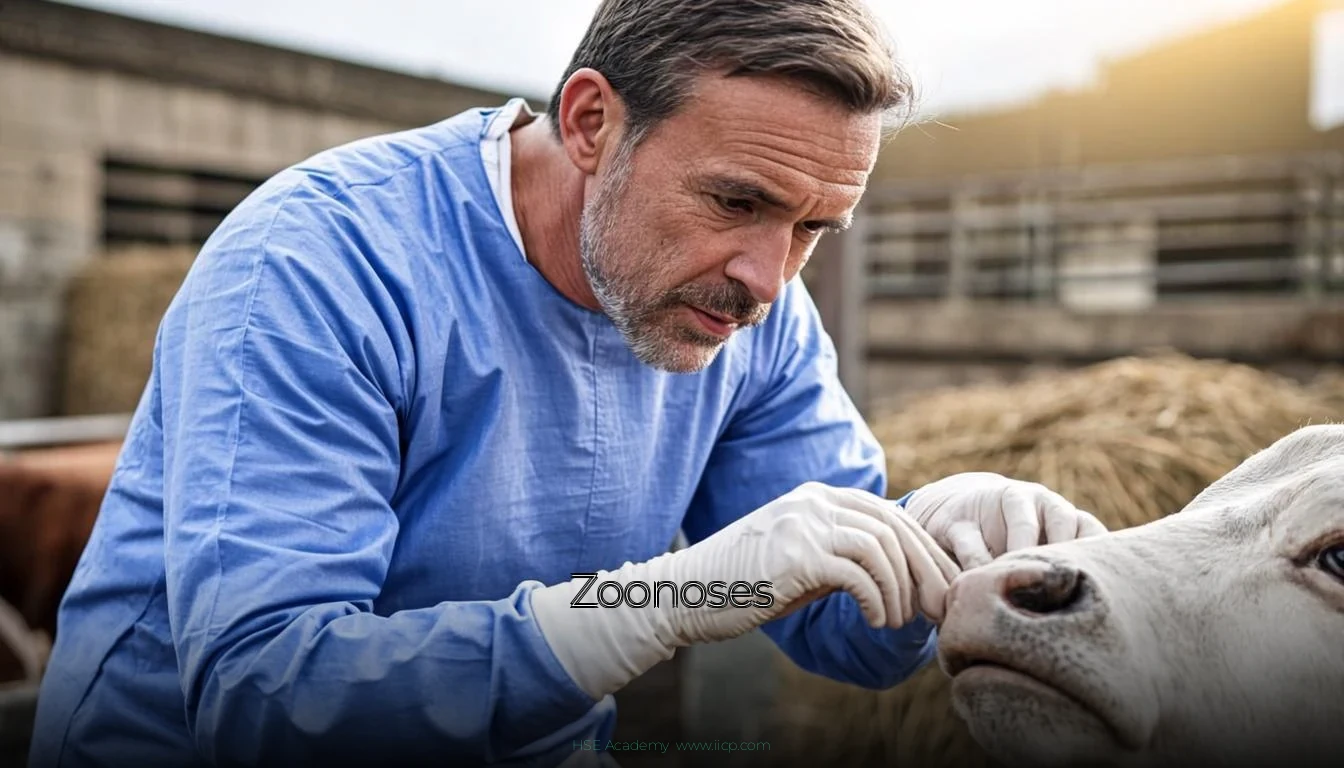
Occupational Zoonoses: Risks for Workers Exposed to Animals
Zoonoses are diseases transmitted from animals to humans. Exposed workers (livestock, slaughterhouses, veterinarians, laboratories) must implement strict preventive measures.
Zoonoses are diseases or infections naturally transmissible from vertebrate animals to humans. The World Health Organization (WHO) lists more than 200 known types of zoonoses. They pose a risk to workers exposed to animals, their products, their excrement, or contaminated environments.
Definition
A zoonosis can be bacterial, viral, parasitic, or fungal. Transmission can occur through direct contact with an infected animal or its tissues, via bites or scratches, by inhaling contaminated aerosols, by ingesting contaminated food or water, or indirectly through the environment and certain vectors.
The transmission routes and preventive measures depend on the biological agent and the occupational activity.
Major Occupational Zoonoses
Brucellosis
A bacterial disease caused by various species of the genus Brucella, notably B. abortus and B. melitensis. It primarily affects livestock farmers, veterinarians, butchers, and laboratory personnel who are exposed.
Transmission can occur through contact with infected animals, blood, placentas, fetuses, or uterine secretions, as well as through the consumption of contaminated, unpasteurized milk or dairy products. Symptoms may include fever, fatigue, joint pain, and in some cases, osteoarticular complications.
Anthrax
An infectious disease caused by the bacterium Bacillus anthracis. Individuals handling infected animals, hides, wool, or other contaminated animal products may be exposed.
The cutaneous form can cause a characteristic lesion that may progress to a black eschar. Inhalation of spores can lead to a severe pulmonary form. The route of exposure and severity depend, among other things, on the contamination scenario.
Rabies
A viral disease caused by the rabies virus, transmitted mainly through the saliva of an infected animal, particularly via a bite or contaminated scratch. Veterinarians, animal handlers, and other workers in contact with animals that may be infected can be exposed.
Rabies is almost always fatal after the appearance of clinical symptoms. Appropriate prevention is essential: pre-exposure vaccination may be indicated for certain categories of workers, but it does not replace immediate medical assessment and post-exposure management.
Q Fever
A bacterial disease caused by Coxiella burnetii. Livestock farmers, veterinarians, and certain workers in slaughterhouses or animal product processing facilities may be exposed, particularly through inhalation of contaminated aerosols from infected animals or birthing products.
The disease can cause an acute infection and, more rarely, chronic complications such as endocarditis. Preventive measures must take into account the animals involved, the operations performed, and the risk of aerosolization.
Leptospirosis
A bacterial disease caused by bacteria of the genus Leptospira. It can particularly affect farmers, sewer workers, sanitation workers, and certain people working in aquatic environments.
Transmission occurs mainly through contact with water or an environment contaminated by the urine of infected animals, when the agent enters the body through mucous membranes or broken skin.
Salmonellosis and Avian Influenza
Salmonellosis is a bacterial infection associated with the ingestion of contaminated food and certain occupational exposures in the animal and food chains.
Avian influenza is a viral infection that can expose workers in contact with infected birds or contaminated environments. Prevention and surveillance must take into account the circulating viruses, health alerts, and the directives of competent authorities. H5N1 and H7N9 are subtypes of avian influenza viruses, but they do not constitute an exhaustive list of viruses to be monitored.
Transmission Routes
- Cutaneous: contact with an animal, its tissues, or contaminated materials; bites, scratches, or penetration through broken skin.
- Mucous: projection of contaminated material into the eyes, nose, or mouth.
- Respiratory: inhalation of contaminated aerosols or particles.
- Digestive: ingestion of contaminated food or water, particularly inadequately treated animal products.
The transmission route depends on the biological agent. Not all zoonoses are transmitted through all of these routes.
Exposed Populations
The professional populations potentially exposed include:
- livestock farmers and shepherds;
- veterinarians and veterinary assistants;
- butchers and slaughterhouse personnel;
- rendering plant workers;
- laboratory personnel handling biological agents;
- animal keepers and zoo staff;
- sanitation workers and certain agricultural professions.
The actual exposure depends on the tasks performed, the animals or biological agents involved, the working conditions, and the preventive measures in place.
Prevention
PPE
Personal Protective Equipment (PPE) must be selected based on a risk assessment and possible exposure routes.
- Gloves: choose a model suitable for the biological risk, the task, and other present hazards. Leather is not universal protection against biological agents.
- Respiratory protection: use suitable equipment when the risk assessment indicates exposure by inhalation. The choice of an FFP2, FFP3, or other protection depends on the agent, the operation, and the conditions of use.
- Eye and face protection: protect the eyes and face against splashes when the risk justifies it.
- Protective clothing, apron, and boots: select equipment compatible with possible contaminations and cleaning or decontamination operations.
PPE complements collective and organizational measures; it does not replace them.
Organizational Measures
- Hygiene: ensure hand washing, cleaning, and when necessary, decontamination of equipment and surfaces. Provide facilities suitable for the activities and possible contaminations.
- Separation of areas: organize circuits and separate clean areas from contaminated areas when the activity requires it, in order to limit the spread of biological agents.
- Training and information: inform workers about transmission routes, safe work practices, procedures to follow after a bite or exposure, and the reporting of incidents.
- Vaccination: consider vaccinations based on the activity, the risk of exposure, applicable health recommendations, and medical advice. The indications, availability of vaccines, and any contraindications must be verified for each situation.
- Medical surveillance: adapt the follow-up to the risk assessment and applicable provisions. Biological or serological tests are not systematic for all exposed workers; their relevance is determined, in particular, by medical assessment.
Prevention must also, where relevant, include the management of waste and animal products, vector and rodent control, and coordination between occupational health, human health, and animal health according to the "One Health" approach.
Regulation in Morocco
Decree No. 2-12-431 of November 25, 2013 sets the conditions for the use of substances or preparations likely to endanger the health of employees or compromise their safety. It includes a title relating to biological risks and provides, in particular, provisions on risk assessment, preventive measures, information, training, and medical surveillance.
Law No. 65-99 forming the Labor Code is also a general reference in the field of health and safety at work. Law No. 17-97 concerns industrial property and should not be cited as a text for the prevention of biological risks.
The applicable veterinary, sanitary, and declaration requirements must be verified according to the disease, the activity, and the current texts. The ONSSA is a reference authority in the field of animal health and the health safety of food products; its mention does not replace the identification of the text applicable to each situation.
Sources et références
-
Code du travail marocain (Loi n° 65-99), Titre IV — articles 281 et suivants : https://natlex.ilo.org/dyn/natlex2/r/natlex/fe/details?p3_isn=67319
-
OIT — NATLEX, décret marocain n° 2-12-431 du 25 novembre 2013 (risques biologiques Maroc) : https://natlex.ilo.org/dyn/natlex2/r/natlex/fe/details?p3_isn=96187
-
OMS — Zoonoses (fact sheet) : https://www.who.int/fr/news-room/fact-sheets/detail/zoonoses