
PPE: Personal Protective Equipment — Complete HSE Guide
PPE (Personal Protective Equipment) is the last line of defense against occupational risks. Helmets, gloves, shoes, harnesses, masks: complete guide to categories, standards and obligations.
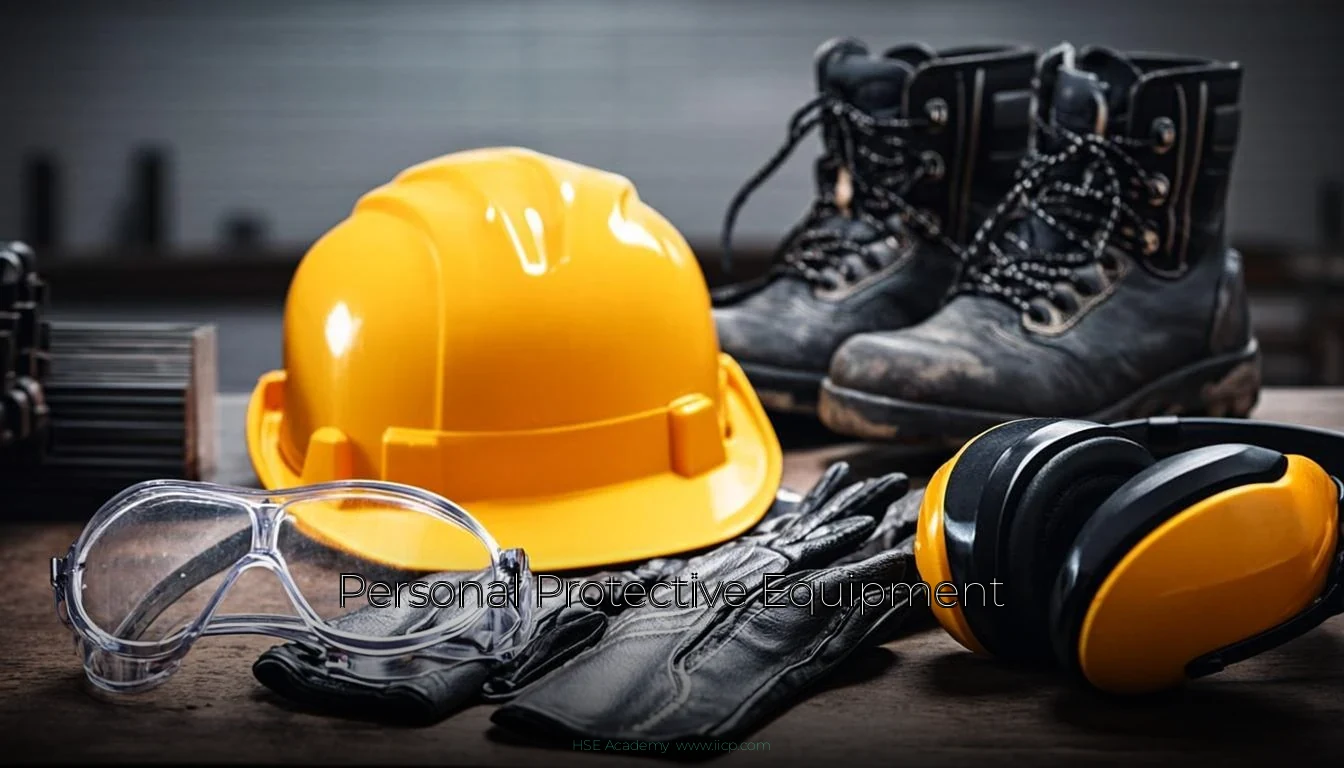
PPE: Personal Protective Equipment — Complete HSE Guide
Personal Protective Equipment (PPE) is an essential line of defence against occupational hazards. From safety helmets and gloves to safety footwear, harnesses and respiratory protection, this guide covers the main PPE categories, technical standards and workplace prevention requirements.
Definition
Personal Protective Equipment (PPE) refers to equipment or devices designed to be worn or used by workers to protect them against one or more occupational hazards.
PPE includes safety helmets, gloves, safety footwear, protective eyewear, hearing protection, respiratory protective equipment and fall protection systems.
PPE should be used when hazards cannot be adequately eliminated or reduced through source-control measures and collective protective measures. It does not replace higher-priority prevention measures, such as eliminating hazards, substituting hazardous substances, isolating dangerous areas or installing collective protection systems.
Main Categories of PPE
Equipment must be selected according to the identified hazards, working conditions and requirements of each task. The standards mentioned below are European or international technical references. Their applicability in Morocco must be assessed in accordance with the national standards and regulations in force.
1. Head Protection: Safety Helmets
Safety helmets protect against hazards such as falling objects and certain impacts to the head. EN 397 applies to industrial protective helmets.
The helmet must be properly adjusted, compatible with other PPE and inspected regularly. Following an impact that could compromise its protective performance, the helmet must be removed from service in accordance with the manufacturer's instructions. Its service life depends on the model, conditions of use and manufacturer recommendations.
2. Eye and Face Protection: Safety Glasses and Face Shields
Safety glasses and face shields protect against flying particles, chemical splashes and certain types of radiation.
The appropriate protection depends on the activity, including grinding, cutting, welding, chemical handling or tasks involving airborne particles. The selected equipment must match the actual hazard and remain compatible with other protective equipment.
3. Hearing Protection: Earplugs and Earmuffs
Earplugs and earmuffs reduce exposure to hazardous noise. Selection depends on the noise level, exposure duration, noise characteristics and working conditions.
The SNR (Single Number Rating) indicates an overall sound attenuation value under standardised conditions. It does not necessarily represent the actual protection achieved in the workplace.
Regulatory exposure thresholds and the measures required when those thresholds are reached depend on the applicable legislation. The relevant Moroccan requirements must therefore be consulted to determine the applicable obligations.
4. Respiratory Protection: Masks and Filtering Devices
Respiratory protective equipment is used against certain airborne contaminants, including dust, fumes, aerosols, gases and vapours.
Filtering devices must be selected according to the contaminant, its concentration, the conditions of use and the filter's limitations.
EN 149 applies to filtering half masks against particles, classified as FFP1, FFP2 and FFP3. Gas and vapour filters are subject to different requirements and are not interchangeable with particle filters.
Filtering devices must not be used in oxygen-deficient atmospheres or environments presenting an immediate danger to life unless the equipment is specifically designed for those conditions.
5. Hand Protection: Safety Gloves
Gloves protect against different occupational hazards:
- Mechanical hazards: cuts, abrasion, punctures and tearing.
- Chemical hazards: contact with hazardous substances.
- Thermal hazards: heat, flames or cold.
- Electrical hazards: contact with live electrical parts, when using equipment specifically designed for that purpose.
EN 388 and EN ISO 374 address certain types of mechanical and chemical protection, respectively. Selection must consider the substance being handled, contact duration, material resistance and any additional hazards associated with the task.
6. Foot Protection: Safety Footwear
Safety footwear protects against impacts, compression, punctures and certain slipping hazards.
EN ISO 20345 establishes requirements for safety footwear. The appropriate model depends on the working environment, such as construction sites, workshops, warehouses, chemical industries or wet areas.
The required characteristics must be assessed according to the actual hazards, including toe protection, penetration resistance, sole grip and resistance to relevant substances.
7. Body Protection: Protective Clothing
Protective clothing is selected according to specific hazards, including chemical splashes, heat, flames, welding, electricity or poor visibility.
Applicable standards vary according to the protection required. For example, EN ISO 20471 covers high-visibility clothing, while EN ISO 11611 covers protective clothing used for welding.
Ordinary workwear does not automatically qualify as PPE. Its protective properties must match the assessed hazards and the manufacturer's specifications.
8. Fall Protection: Harnesses and Fall Arrest Systems
Fall protection systems are used when work presents a risk of falling from height and collective protective measures cannot sufficiently eliminate that risk.
A system may include a full-body fall arrest harness, an energy-absorbing lanyard, connectors and a suitable anchorage point. EN 361 covers full-body harnesses, while EN 363 addresses personal fall protection systems.
Selection must take into account the available clearance, required fall clearance, swing-fall risk, compatibility of components and rescue arrangements. Workers must be trained in the correct use, inspection and limitations of this equipment.
Employer Responsibilities in Morocco
In Morocco, occupational risk prevention is governed in particular by Law No. 65-99 on the Labour Code, promulgated by Dahir No. 1-03-194 of 11 September 2003, together with the applicable provisions on occupational hygiene and employee safety.
Preventive measures must take account of the laws and regulations applicable to the relevant activity and workplace.
Key prevention measures include:
- Identifying and assessing occupational hazards.
- Selecting PPE suited to the identified risks and actual working conditions.
- Providing the necessary equipment.
- Informing and training workers in its correct use.
- Checking equipment condition and suitability for the tasks performed.
- Maintaining, storing and replacing damaged equipment.
- Keeping appropriate records of equipment and preventive actions.
Specific requirements concerning the provision, payment and inspection of PPE must be determined by reference to the applicable Moroccan legal and regulatory provisions.
How to Select and Maintain PPE
PPE selection must be based on a prior risk assessment. Equipment must be appropriate for the hazard, task, user and working environment.
Before use, the following points should be checked:
- Compliance with applicable requirements.
- Suitability for the identified hazards.
- Overall condition and absence of damage.
- Presence of the required markings and manufacturer information.
- Compatibility with other PPE worn at the same time.
- Adequate user training on correct use and protection limitations.
CE marking applies within the European regulatory framework and should not be presented as a universal requirement in every country. In Morocco, the national requirements applicable to the product concerned must be verified.
Maintenance must follow the manufacturer's instructions. Any equipment that is damaged, contaminated or has experienced an event that could compromise its protective performance must be withdrawn from service and replaced when necessary.
Conclusion
Personal Protective Equipment plays an essential role in preventing occupational accidents and work-related illnesses. Its effectiveness depends on proper selection, correct use, maintenance and worker training.
Within an effective HSE management system, PPE must complement hazard elimination, source-control measures and collective protection rather than replace them.