
Workplace Fire Safety: Prevention, Extinguishers and Evacuation
Workplace fire safety relies on prevention, detection, extinguishing and evacuation. This article presents regulatory obligations, types of extinguishers and evacuation drills.
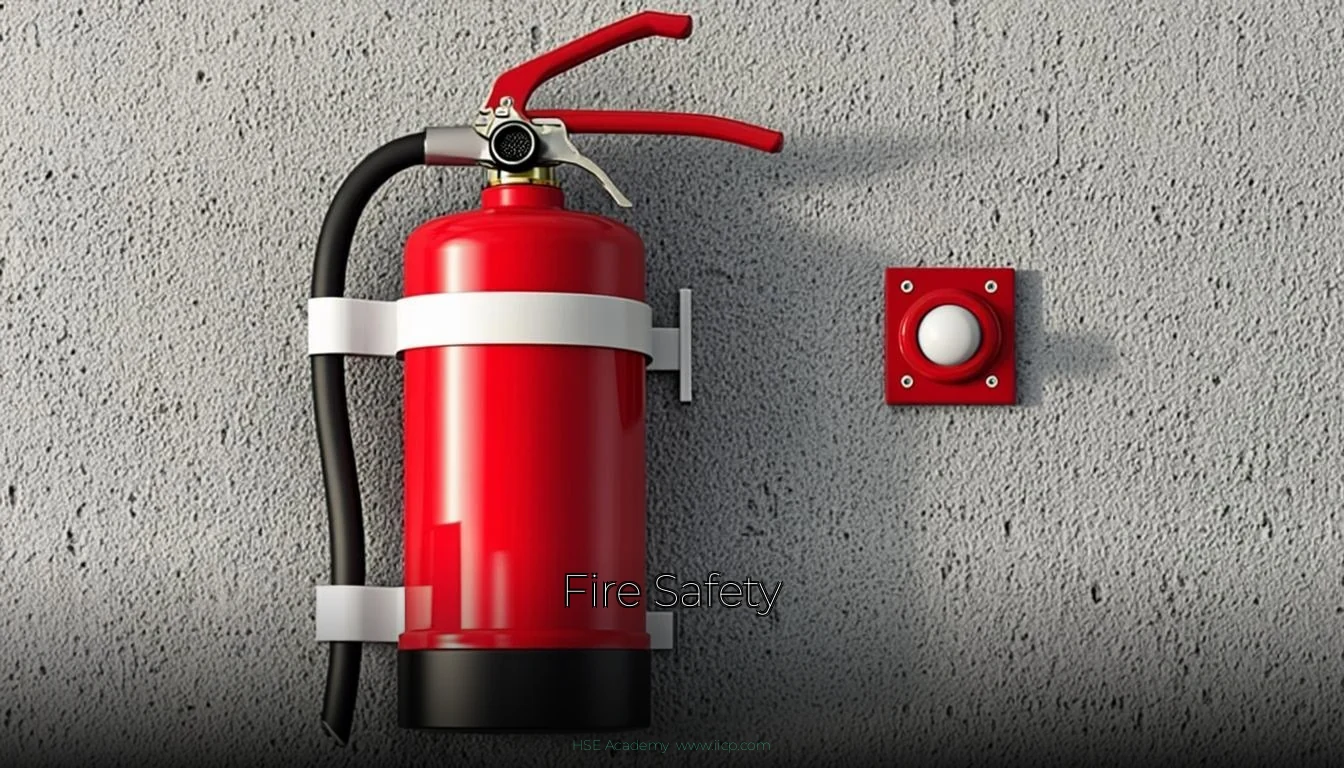
Fire Safety at Work: Prevention, Fire Extinguishers and Evacuation
Workplace fire safety relies on fire prevention, early detection, appropriate firefighting equipment and the safe evacuation of occupants. This article explains essential HSE practices, fire classes, fire protection equipment and key regulatory references applicable in Morocco.
Workplace fire safety is an essential part of occupational risk prevention. A fire can cause injuries, loss of life, damage to equipment and disruption to business operations.
Effective prevention requires a comprehensive approach combining technical, organisational and human measures. In Morocco, the Labour Code, particularly Articles 281 onwards, and Order No. 93-08 of 12 May 2008 establish requirements relating to occupational hygiene and safety, including aspects of fire prevention.
1. The Four Pillars of Fire Safety
An effective fire safety strategy is based on four complementary objectives.
1.1. Prevent Fire Outbreaks
Fire prevention aims to eliminate or reduce potential sources of ignition. Key measures include:
- Inspecting electrical installations and heating equipment.
- Storing flammable substances safely.
- Controlling hot work activities, such as welding and grinding.
- Maintaining good housekeeping and workplace cleanliness.
- Managing combustible waste and sources of ignition.
1.2. Detect Fire and Raise the Alarm
Early detection enables a rapid response before a fire spreads. Depending on the risks and building configuration, detection may involve smoke detectors, heat detectors or an automatic fire detection system.
Alarm systems must be appropriate for the premises and enable occupants to recognise the warning signal promptly.
1.3. Control and Extinguish Fire
First-response firefighting equipment includes portable fire extinguishers, fire hose reels and, where necessary, automatic fire suppression systems.
Equipment selection depends on the combustible materials present, the risks identified and the characteristics of the premises.
Firefighting should only be attempted when it can be carried out without exposing anyone to danger. Raising the alarm, contacting emergency services and evacuating occupants remain priorities.
1.4. Evacuate Occupants Safely
An evacuation procedure must enable everyone on the premises to reach a safe location as quickly as possible.
This requires clear escape routes, appropriate signage, emergency lighting where required and a designated assembly point. Procedures must also take account of people who may need assistance during evacuation.
2. Fire Classes and Selecting the Right Extinguisher
The appropriate fire extinguisher depends on the combustible material involved and the equipment concerned. European fire classification distinguishes Classes A, B, C, D and F.
| Fire class | Type of fire | Examples |
|---|---|---|
| A | Solid materials, generally producing embers | Wood, paper, cardboard |
| B | Flammable liquids or liquefiable solids | Petrol, solvents, certain plastics |
| C | Flammable gases | Butane, propane, methane |
| D | Combustible metals | Magnesium, sodium |
| F | Cooking oils and fats | Deep-fat fryers, commercial kitchen equipment |
Which Fire Extinguisher Should Be Used?
- Water spray: Suitable for many Class A fires. Certain models containing additives may also be suitable for some Class B fires.
- ABC dry powder: Suitable for many Class A, B and C fires, subject to the manufacturer's specifications.
- Carbon dioxide (CO₂): Particularly useful for certain flammable-liquid fires and electrical equipment under voltage, when the extinguisher is rated for that purpose.
- Class D special powder: Designed for specific combustible metals.
- Class F extinguishing agents: Designed for cooking oil and fat fires.
Important: A fire involving electrical equipment is not a separate fire class. The extinguisher must be explicitly suitable for use on energised electrical equipment. Never use an extinguishing agent that is unsuitable for the situation.
In the event of a gas leak or gas fire, the gas supply should only be shut off if this can be done safely. Never attempt to extinguish a gas fire if the supply cannot be controlled, as unburned gas may create an explosive atmosphere.
A portable extinguisher should only be used on an incipient fire when a safe escape route remains available. If smoke becomes significant or the fire spreads rapidly, evacuate and alert the emergency services.
3. Fire Safety Systems (SSI)
A Fire Safety System, commonly referred to in French regulations as a Système de Sécurité Incendie (SSI), brings together equipment designed to detect fire, activate alarms and control certain building safety functions.
Depending on the system design, it may include:
- Fire detection equipment.
- Fire alarm devices.
- Smoke control and extraction systems.
- Fire doors and compartmentation dampers.
- Control devices for building safety functions.
The required equipment depends on the building type, its intended use, occupancy, configuration and applicable regulations.
In Morocco, the General Construction Regulations relating to fire and panic safety in buildings, approved by Decree No. 2-14-499 of 20 October 2014, constitute an important reference for buildings within their scope.
The applicable provisions and any additional requirements imposed by the competent authorities must be checked for each building category. The same fire safety system requirements should not automatically be assumed to apply to every establishment.
4. Organising Workplace Evacuation
An effective evacuation procedure must be prepared before an emergency occurs.
Essential Measures
- Identify emergency exits and escape routes.
- Keep exits and circulation routes unobstructed.
- Display evacuation plans and instructions where required.
- Designate an assembly point.
- Arrange assistance for people who cannot evacuate independently.
- Appoint and train personnel responsible for guiding the evacuation.
- Conduct exercises appropriate to the risks and activities of the establishment.
In organisations using this approach, responsibilities may be divided between the following roles:
- Evacuation guide (guide-file): Directs occupants towards a safe exit.
- Sweep person (serre-file): Checks assigned areas without putting themselves at risk.
- Evacuation coordinator: Collects relevant information and facilitates communication with emergency services.
These terms describe a commonly used organisational approach to fire safety. Their designation and implementation must be adapted to the establishment's circumstances.
How Often Should Evacuation Drills Be Conducted?
In France, Article R. 4227-39 of the Labour Code requires periodic drills and tests at least every six months within its scope of application.
In Morocco, this frequency should not be presented as a general legal requirement without a specific Moroccan regulatory reference. The appropriate frequency must be determined according to the regulations applicable to the establishment, its risk profile and any requirements imposed by the competent authorities.
It is recommended that organisations document their drills, record difficulties encountered and track corrective actions. This helps progressively improve evacuation effectiveness.
5. Employer Responsibilities in Morocco
Fire prevention forms part of the employer's general responsibilities for occupational hygiene and safety.
Main Regulatory References
Moroccan Labour Code — Law No. 65-99
Article 281 requires employers, among other things, to ensure workplace cleanliness and appropriate hygiene and sanitary conditions, explicitly mentioning fire prevention arrangements. Article 282 addresses workplace arrangements intended to protect employees' safety.
Order No. 93-08 of 12 May 2008
This order establishes general and specific implementing measures relating to Articles 281 to 291 of the Labour Code. Chapter V, comprising Articles 25 to 31, deals specifically with fire prevention.
General Construction Regulations on Fire Safety
Decree No. 2-14-499 of 20 October 2014 approves the General Construction Regulations establishing fire and panic safety requirements for buildings. Its application depends on the scope and specific provisions relevant to the buildings concerned.
What Measures Should Employers Implement?
Depending on the risks and applicable requirements, employers should assess:
- Whether firefighting equipment is suitable for the risks present.
- The condition of electrical installations and equipment that may create a fire hazard.
- The storage of flammable substances and control of ignition sources.
- Access to emergency exits and firefighting equipment.
- Employee information, instruction and training.
- Emergency alert arrangements and evacuation procedures.
- Maintenance of equipment and retention of required inspection records.
Specific requirements concerning inspections, safety registers, evacuation plans and drills must be established by consulting the regulations applicable to the activity and premises. French legal requirements must not automatically be applied to Moroccan workplaces.
6. Best Practices for Improving Fire Prevention
To strengthen workplace fire safety, organisations should implement a structured approach:
- Identify ignition sources and combustible materials.
- Assess potential fire scenarios.
- Define appropriate prevention and protection measures.
- Check the accessibility and condition of safety equipment.
- Train employees on emergency procedures and appropriate responses.
- Test evacuation arrangements.
- Analyse identified shortcomings and monitor corrective actions.
This approach should be reviewed regularly, particularly after changes to premises, work processes or materials used.
Conclusion
Workplace fire safety involves much more than installing fire extinguishers. It requires effective fire prevention, early detection, appropriate equipment, employee training and well-organised evacuation procedures.
In Morocco, the Labour Code, Order No. 93-08 and the General Construction Regulations on fire safety are essential references to consider according to each establishment's circumstances.
A rigorous HSE approach helps protect workers, limit property damage and strengthen business continuity.
Sources and References
-
International Labour Organization — NATLEX: Moroccan Order No. 93-08 of 12 May 2008, concerning implementing measures for Articles 281 to 291 of the Labour Code.
https://natlex.ilo.org/dyn/natlex2/r/natlex/fe/details?p3_isn=80437 -
Moroccan Labour Code — Law No. 65-99: Legislation concerning occupational hygiene and employee safety.
https://www.wipo.int/wipolex/fr/legislation/details/7371 -
General Secretariat of the Government of Morocco: Legislation and regulations relating to construction and fire safety.
https://www.sgg.gov.ma/Legislation.aspx -
INRS — Fire at the Workplace: Evacuation, Intervention and Safety Instructions. This French source is used as a technical reference, not as Moroccan legislation.
https://www.inrs.fr/risques/incendie-lieu-travail/evacuation-intervention-consignes-securite -
INRS — Fire at the Workplace: Fire Risk Prevention Approach.
https://www.inrs.fr/risques/incendie-lieu-travail/demarche-prevention-risque-incendie.html