Workplace Hygiene: General Measures and Prevention Principles
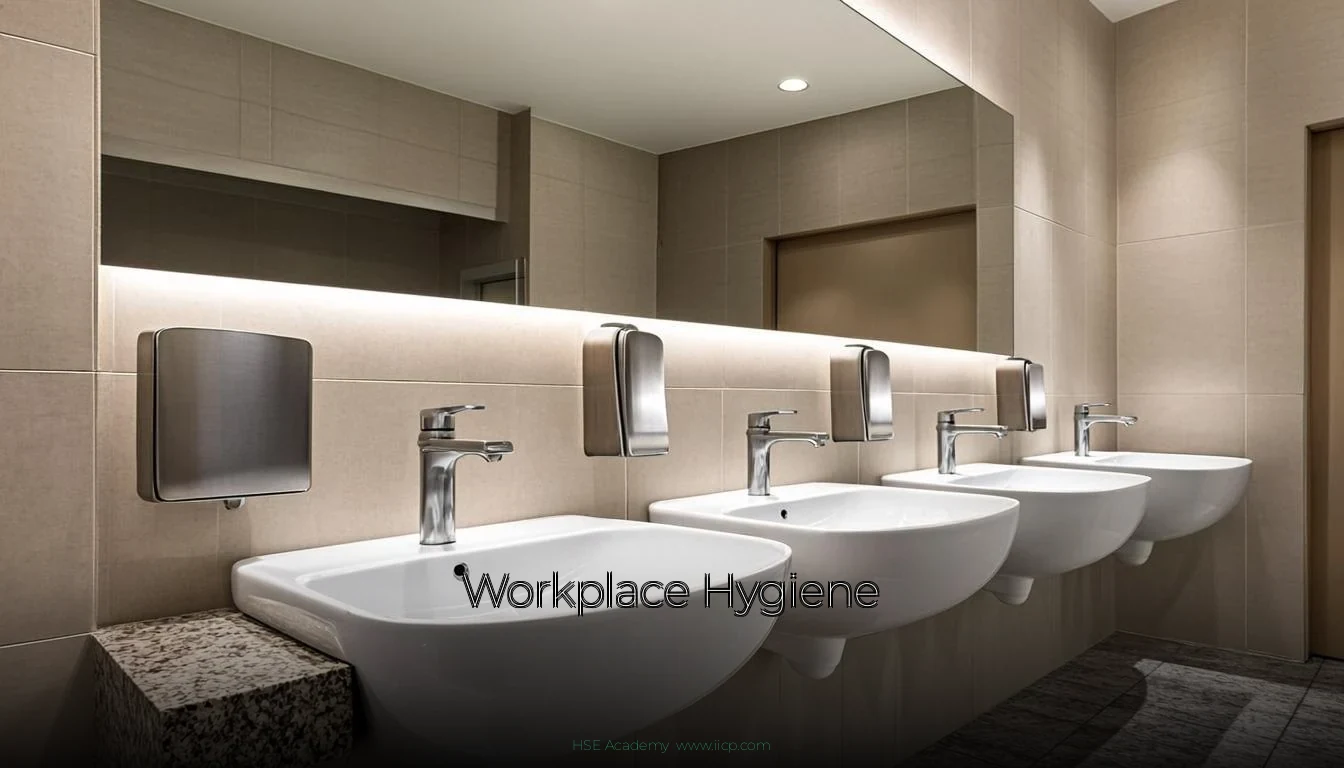
Workplace hygiene covers all measures to protect workers' health. This article presents general principles, employer obligations and best practices.
Expert QHSE (Quality, Health, Safety, Environment) articles by IICP HSE Academy. Sources: OSHA, INRS, ISO, IMANOR.

Workplace hygiene covers all measures to protect workers' health. This article presents general principles, employer obligations and best practices.

ISO 22000:2018 is the international standard for food safety management systems. It helps organizations identify and control hazards related to food safety.

ISO 26000 is the international standard providing guidance on corporate social responsibility. It covers 7 fundamental principles and 7 core subjects.

Law 65.99 forming the Labor Code devotes an entire title to hygiene, safety and occupational medicine rules. This article details employer obligations, the 50-employee threshold for medical service, and the safety and hygiene committee.

The International Labour Organization (ILO) has adopted about 40 Conventions and Recommendations specifically dedicated to occupational health and safety. Convention 155 (1981) establishes the national OSH promotional framework.

INRS (National Institute for Research and Safety, France) publishes internationally recognized prevention solution sheets. Overview of the resources available on work at height.

OSHA requires fall protection from 1.8 m (6 feet) in construction. This article details 29 CFR 1926.501 and 1926.502 requirements applicable to work at height.

HACCP is a systematic method for preventing biological, chemical, and physical hazards in food safety. Adopted by the Codex Alimentarius (FAO/WHO), it relies on 7 fundamental principles.

WHO defines occupational health as promoting the highest physical, mental, and social well-being of workers. Discover its 3 main goals and the ILO framework.